



River channels in nearly every operational region collect sediment from continuous erosion sources and surface inflows, while aquatic vegetation—water hyacinth formations, reed colonies, cattail groupings, submerged hydrilla patches or milfoil—builds up thick enough to reduce cross-sectional flow area markedly. The paired issues compromise navigation passages, flood conveyance sections, irrigation delivery systems, and general water movement. River channel dredging that extracts sediment strata and eliminates aquatic weeds through integrated operations generates maintenance intervals substantially longer than those achieved by isolated approaches.
Maintenance histories from numerous river sites illustrate the mutual reinforcement. Vegetation stands decrease flow speed, permitting finer sediment fractions to deposit in low-energy pockets; the resulting reduced depths then enable weeds to anchor more securely and extend coverage. Treatments directed solely at cutting vegetation or skimming upper sediment layers leave the complementary element mostly unaffected, producing rebound that frequently restores original restrictions within one annual cycle. Integrated river dredging severs the linkage, reestablishing design depth and velocity to constrain recolonization and prolong the functional service life of the cleared section.
Why Aquatic Weeds and Sediment Buildup Require Combined River Dredging
Sediment accretion in representative mid-scale rivers commonly attains 60–100 cm across ten to fifteen years, contributed by upstream slope instability, cultivated land drainage, or lateral tributary supply. Aquatic weeds amplify the rate. Floating water hyacinth proliferates under elevated temperatures and nutrient availability, developing multilayered mats that intercept particulates and depress oxygen concentrations. Emergent reeds and submerged species—cattails, hydrilla—consolidate bottom material, constrict effective width, and introduce additional hydraulic resistance.
Field documentation from successive clearance cycles consistently demonstrates the process: plant-induced velocity drop accelerates settling, while ongoing shallowing favors progressive vegetation advance. Work limited to mechanical weed removal or partial desilting delivers transient relief; undisturbed roots and retained bed material support rapid reoccupation. Combined river dredging—simultaneous extraction of both constituents—modifies the controlling geometry. Channels processed in this manner preserve elevated average velocities, moderate peak flood stages with greater consistency, and exhibit diminished incidence of dissolved oxygen deficits that impair downstream aquatic resources.
Main Methods for River Dredging and Aquatic Weed Removal
Method adoption derives from quantified field measurements: vertical sediment thickness, vegetation density and rooting characteristics, channel planform, disposal site accessibility, and compliance stipulations.
Mechanical Harvesting
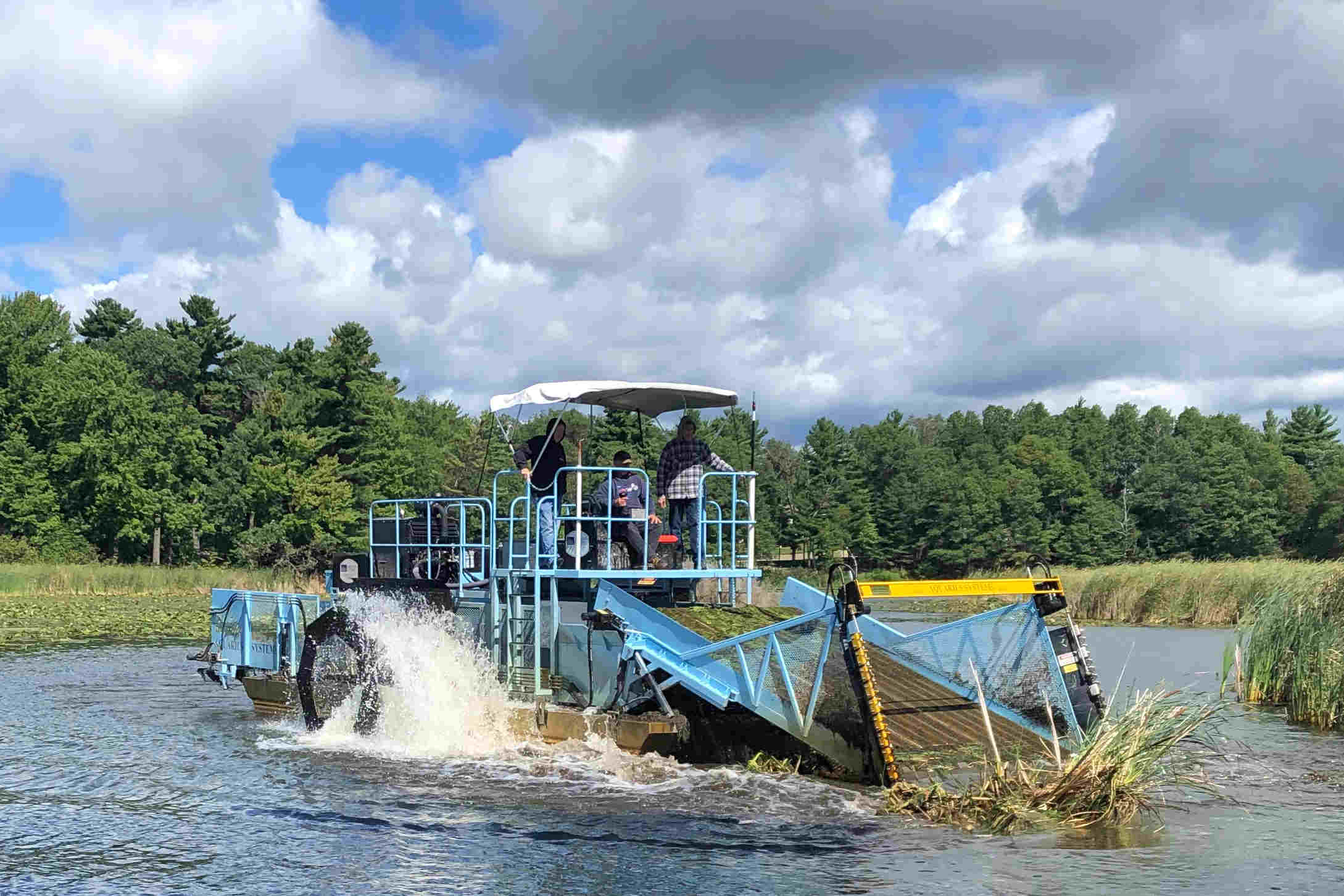
Harvesting platforms equipped with variable-position cutter assemblies and aft conveyors section and retrieve vegetation across depths typically extending to 3–4 meters. The technique efficiently clears large expanses of floating and emergent growth in unobstructed channels. Harvested biomass transfers ashore or to auxiliary vessels, restricting bottom agitation in zones with protected substrates, although persistent root structures generally necessitate additional processing.
Suction Harvesting
Suction configurations extract submerged vegetation and associated unconsolidated sediment via modulated intake nozzles, incorporating pre-pump shredding to limit transported volume. Diver oversight or automated positioning achieves detail near fixed assets or in narrow reaches. Regulated intake flow maintains turbidity compliance, rendering the method viable in environmentally constrained corridors, though extreme rooting density or biomass concentration retards progression.
Hydraulic Dredging with Cutter Head
Cutter suction dredgers constitute the principal means for extensive river channel dredging encompassing sediment and vegetation concurrently. The ladder-supported cutter rotates to disintegrate cohesive deposits and transect fibrous plant structures, supplying the fragmented mixture to the suction inlet. Hydraulic dredge pumps convey the resultant slurry over pipelines extending 1200–3500 meters, frequently augmented by in-line boosters. Hourly throughputs ranging 400–800 cubic meters occur under typical mixed-feed conditions. The persistent operational loop accommodates fluctuating material composition with minimal manual adjustment.
Amphibious and Multi-Functional Equipment
Amphibious tracked platforms traverse intertidal flats, constricted channels, or densely vegetated shallows beyond reach of standard floating units. Modular attachments—root-raking assemblies, excavation buckets, or slurry pumps—conform to variable demands. Operational flexibility offsets comparatively modest hourly capacity relative to cutter suction dredgers, rendering these machines indispensable in discontinuous or access-restricted environments.
Key Machinery Used in River Channel Dredging with Weed Control
System endurance under combined abrasive and entangling loads governs sustained productivity.
Cutter Suction Dredgers (CSD)
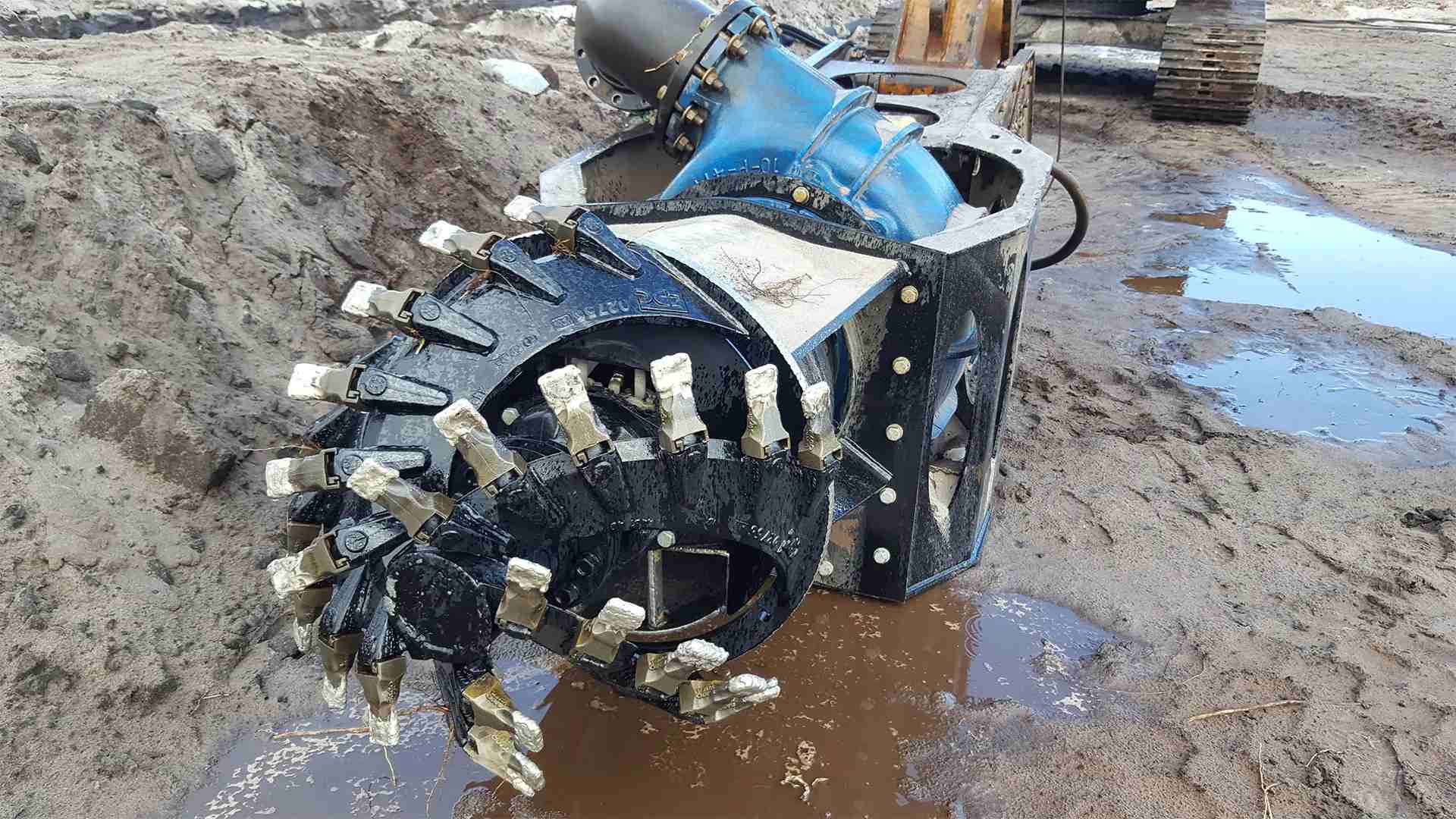
CSD installations serve as the foundation for thorough river desilting and aquatic weed removal programs. Cutter heads incorporate serviceable hardened inserts and segmented cutting elements that reduce dense vegetation while mobilizing compacted sediment. Hydraulic dredge pumps, furnished with abrasion-resistant internals and supplementary agitation, ensure reliable slurry passage across lengthy discharge runs. Diesel prime movers connected through marine gearboxes furnish dependable output for protracted assignments in isolated settings. Discharge routing facilitates gravity dewatering or engineered material placement.
Dedicated Aquatic Weed Harvesters
Vegetation-specific harvesters incorporate expansive cutting mechanisms, inclined transfer conveyors, and generous collection volume. They generate open pathways or diminish overall biomass preceding sediment removal sequences.
Suction Systems and Weed Pumps
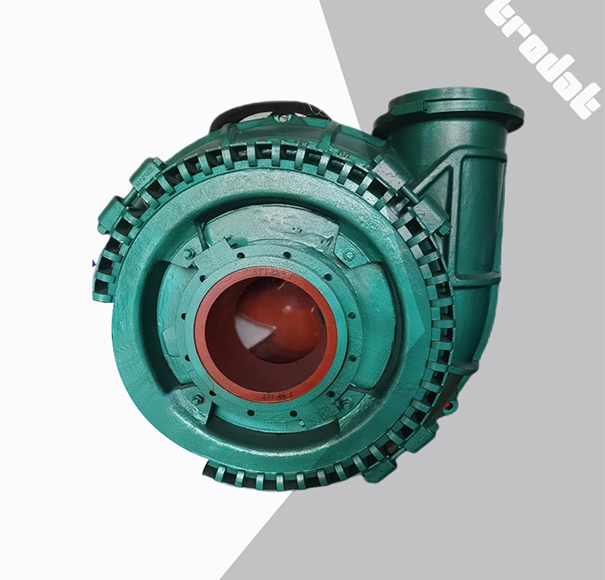
Hydraulic slurry pumps featuring wide-vane designs and integrated agitators process elevated organic fractions without recurrent obstruction. Hard-faced wear components and enlarged flow paths extend service duration in demanding abrasive and fibrous duty.
Choosing the Right Equipment
Selection parameters encompass channel morphology, prevailing weed characteristics, discharge distance specification, energy provision, and projected lifecycle expense. Pronounced water hyacinth presence alongside appreciable sediment thickness directs preference toward cutter suction dredgers with substantial hydraulic dredge pump capacity. Limited depth profiles or confined alignments favor purpose-built harvesters or amphibious assemblies. Component resilience, proximate spare-part supply, and operator proficiency exert direct influence on realized output and overall expenditure.
Step-by-Step Guide: How to Perform Effective River Dredging and Weed Removal
Execution adheres to a structured progression.
Commence with exhaustive site quantification: establish sediment layering through physical sampling or geophysical profiling, delineate weed extent and attachment depth, capture velocity distributions, demarcate entry points and disposal venues. Fulfill permitting obligations, embedding prescribed turbidity safeguards and spoil disposition directives.
Formulate the dominant method alongside adjunct procedures. Pervasive floating vegetation ordinarily justifies antecedent harvesting to alleviate subsequent pumping demands prior to hydraulic dredging initiation. Unified advancement positions cutter suction dredgers for sequential cuts coordinated with hydraulic gradient.
Throughout implementation, deploy isolation barriers proximate to vulnerable features, observe cutter degradation indicators and pump performance metrics, modulate penetration rate amid concentrated weed zones. Route conveyed slurry to containment volumes engineered for solids-liquid separation.
Administer spoils in accordance with governing criteria: promote sedimentation, extract supernatant, execute mandated analyses, and allocate material for beneficial application—typically revetment construction or permitted fill.
Institute surveillance framework: conduct recurrent topographic and observational assessments, execute localized interventions upon threshold attainment, and archive performance data to guide future scheduling.
Benefits and Considerations When Using Modern Dredging Equipment for Weed-Infested Rivers
Contemporary cutter suction dredgers together with coordinated auxiliary plant attain superior volumetric rates, abbreviating exposure to meteorological variability and hastening operational resumption. Modulated agitation combined with pipeline confinement curtails downstream dispersion relative to legacy excavation practices. Recovered channel conveyance diminishes flood-stage amplification, regularizes irrigation withdrawal, and reduces dependency on emergency responses.
Constraints involve allocation for appropriately specified capital plant, sustained fuel consumption across prolonged engagements, and episodic management of anomalous organic accumulations. Cutter profile adaptation, agitation enhancement, and systematic servicing confine disruptions to tolerable levels. The aggregate outcome—stable hydraulic behavior and attenuated recurrence—underpins preference for unified hydraulic methodologies across the majority of river channel rehabilitation assignments.
TRODAT (SHANDONG) MARINE ENGINEERING CO., LTD
TRODAT (Shandong) Marine Engineering Co., Ltd directs resources toward dredging plant and complementary systems intended for riverine and marine service. Accumulating more than twenty years within marine engineering and dredger deployment, the company fabricates hydraulic dredge pumps, diesel engines, marine gearboxes, hydraulic power modules, winches, deck machinery, and associated fittings. Product lines accommodate dredger new construction, vessel mid-life conversion, or in-service component substitution. ISO9001:2015 quality regime and IACS marine classification certifications regulate output. Positioned in Weifang, Shandong, with established supply-chain integration, TRODAT concentrates on configurations substantiated through prolonged exposure to severe field environments.
Conclusion
River channel dredging that simultaneously extracts sediment accumulation and aquatic weeds reinstates dependable conveyance, augments flood moderation, and upholds navigation utility alongside ecological viability. Hydraulic cutter suction processes, reinforced by adequate pumps and aligned peripherals, furnish the volumetric capacity and adaptability requisite for diverse project parameters. Comprehensive site delineation, disciplined operational conduct, and continuous performance tracking transform clearance into durable channel integrity. Responsible entities and executing contractors obtain distinct hydraulic and fiscal returns when equipment correspondence to actual conditions remains precise and procedures conform to validated standards.
FAQs
What is the most effective way to handle aquatic weeds during river channel dredging?
Cutter suction dredgers configured with vegetation-compatible cutter heads reduce sediment and plant material concurrently, producing slurry suitable for continuous high-volume pipeline discharge.
How do cutter suction dredgers manage dense vegetation like water hyacinth in river projects?
The cutter head divides dense floating and anchored growth into transportable segments, enabling hydraulic dredge pumps to sustain uninterrupted flow without persistent line impediments.
Why is it necessary to remove both sediment and aquatic weeds in river dredging work?
Vegetation diminishes velocity and retains sediment, while shallow sediment promotes weed expansion—concurrent removal suppresses rapid reoccupation and establishes more persistent channel restoration.
Which equipment works best for river desilting where heavy water hyacinth is present?
Cutter suction dredgers fitted with high-capacity hydraulic dredge pumps address substantial floating vegetation dependably, delivering consistent throughput and accommodating extended discharge in expansive river contexts.
How should operators select dredging machinery for channels with significant aquatic weed coverage?
Examine depth distribution, weed biomass and rooting profile, discharge distance targets, and resource allocation—hydraulic cutter suction assemblies with durable pumps and cutters routinely provide superior operational reliability and efficiency for medium-to-large river dredging engagements.

Post Comment