



Deck machinery on dredging vessels manages the essential functions of station keeping, swing control, and anchor handling amid ongoing marine and seabed forces. Cutter suction dredgers along with trailing suction hopper dredgers depend on these assemblies to keep the cutter engaged, execute controlled lateral arcs, and counteract drift from currents or tides. Deck machinery for dredging vessels—especially winches, positioning spuds, anchor chains, boom arms, and related fittings—requires precise matching to vessel scale, operating environment, and production goals so that interruptions stay minimal and output holds steady.
River, port, and coastal dredging expose components to persistent abrasion from sediments, saltwater attack, and repeated cyclic stresses during advances and swings. Winches supply the regulated force needed for ladder positioning and side movement. Spuds create the stable pivot that defines each cut. Anchor chains carry winch tension out to anchors for reliable grip. Boom arms take care of lifting and deployment work. Every piece demands thoughtful sizing and material choice to endure without accelerated wear or unexpected breakdown.
Why Proper Deck Machinery Selection Matters for Dredging Operations
Production levels hinge on consistent vessel control. Insufficient winch capacity or mismatched spuds frequently result in erratic swings, uneven dredging profiles, and output reductions of 25–40% when working through stiff clays or under strong flows. Positioning arrangements built around spuds hold the vessel firm during active cutter work, whereas side winches allow accurate arc management that captures the maximum volume per pass.
Safety factors never recede into the background. Overstressed lines or corroded parts heighten the chance of sudden failures or spud movement, which can lead to vessel listing or crew exposure in open-water settings. Salt, moisture, and fine particulates shorten component life unless marine-grade alloys, robust coatings, and protected bearings go into the build. Financial consequences appear plainly across extended contracts: dependable deck machinery lowers repair frequency and lost time, protecting rates that climb quickly whenever plant stands idle.
Site conditions dictate different priorities. River corridor deepening calls for spuds capable of deep penetration in soft deposits with limited lateral deflection. Offshore aggregate recovery needs anchor chains and windlasses that resist reversing tidal pulls without constant readjustment. Equipment undersized for the task forces reduced swing radii, slower advances, or early component swaps.
Key Types of Deck Machinery for Dredging Vessels
Dredging vessels carry deck hardware shaped to fit their working pattern. Knowledge of principal categories supports accurate pairing with project requirements.
Winches
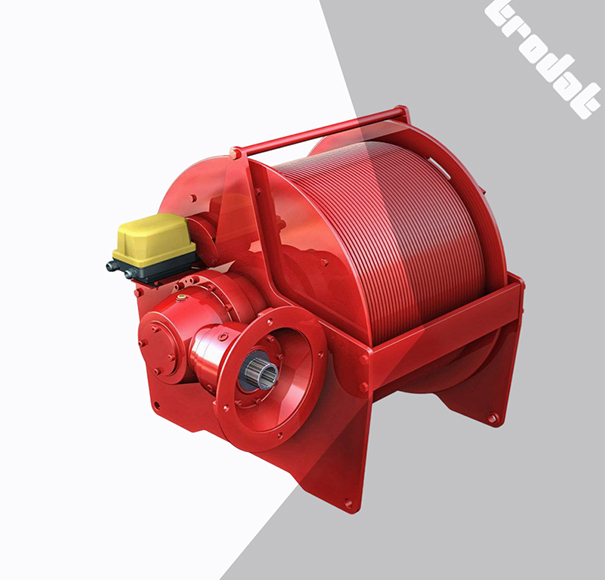
Winches bear the bulk of dynamic forces aboard. Ladder winches adjust suction arm height, calling for considerable torque to manage weight in greater depths. Side-wire winches, often termed swing winches, regulate lateral shifts by tensioning anchor lines and permitting fan-shaped movement around a spud. Spud winches raise and lower positioning piles, typically in coordinated pairs during stepping sequences. Anchor winches handle mooring deployment under sustained load. Hydraulic actuation appears most often because it supplies flexible speed adjustment and concentrated power within tight deck footprints, although electric drives find use in lighter or secondary applications. Pull ratings ordinarily cover 20–130 tons, proportioned to vessel size and anticipated dredging resistance.
Positioning Spuds / Spud Piles
Spuds furnish the anchor point that governs cutter suction dredger precision. Stern-mounted fixed spuds secure the vessel throughout cutting phases, while walking or rotating variants support incremental forward progress without full anchor recovery. Diameters usually range 1000–1700 mm, lengths set by required embedment—commonly 30–50 meters through loose overburden. Construction relies on high-strength steel tubes fitted with hardened shoe sections to tolerate repeated insertion cycles in gritty seabeds. Stronger flow regimes necessitate added wall thickness or bracing to limit deflection.
Anchor Chains and Systems
Anchor chains transfer winch effort to seabed holding devices, preserving tension across full swing cycles. Stud-link construction prevents kinking and delivers uniform strength under marine conditions, with grade selection (R3, R4, or higher) aligned to breaking requirements against vessel mass and site exposures. Chain scope per side generally spans 300–700 meters, calibrated for depth and required working radius. Windlasses control controlled release and recovery, supplemented by fairleads and stoppers that reduce friction damage and secure the rode. Pairing with anchors of appropriate holding type—stockless, high-hold, or drag-embedded—secures performance in mud, sand, or mixed bottoms.
Boom Arms / Cranes and Other Fittings
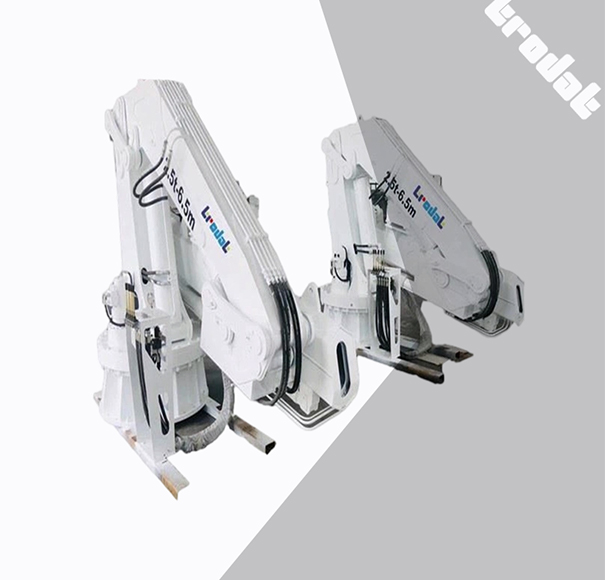
Boom arms and deck cranes execute lifting for anchor placement, floating line support, or gear transfers. Knuckle-joint or extendable booms offer the outreach demanded by cluttered deck arrangements. Capacities from 10–70 tons address standard duties, driven hydraulically for accurate positioning. Ancillary items—bollards, chocks, fairleads, chain lockers—spread loads evenly and shield lines from abrasion or overload.
Type comparisons show distinct advantages: hydraulic winches provide superior responsiveness for heavy ladder and swing duties on larger cutter suction dredgers, while spud arrangements focus on rigid station holding in fixed dredging setups.
Essential Factors for Selecting Deck Machinery for Dredgers
Selection proceeds from site realities through to extended durability.
Project-Specific Requirements
Vessel category and service profile establish initial parameters. A medium cutter suction dredger assigned to river sediment removal needs winch ratings distinct from those on a large hopper vessel mining marine sands. Target depth sets ladder winch and spud sizing. Seabed shear strength influences spud diameter and lower-end reinforcement. Planned swing radius and discharge pipeline length determine side-winches capacity and anchor chain length.
Technical Specifications
Pull rating, payout speed, and actuation method constitute fundamental measures. Hydraulic configurations yield adaptable control under shifting dredging loads. Corrosion safeguards—hot-dip galvanizing, multi-layer epoxy, or stainless inserts—prove critical in saline exposure. Continuous-duty ratings support round-the-clock shifts during high-output periods.
Certifications and Durability
Approvals from IACS-class societies (BV, LR, DNV, and equivalents) attest to compliance with load, fatigue, and marine standards. High-tensile steels combined with sealed bearings and replaceable wear parts extend overhaul intervals. Operational histories from analogous projects supply practical guidance—components surpassing 15,000 hours in varied soils generally outlast economy-grade substitutes.
Integration and Maintenance
Compatibility with vessel hydraulic manifolds and available deck space prevents expensive rework. Accessibility for periodic inspection and ready spare-part supply limit downtime. Regular lubrication schedules, load monitoring, and alignment checks sustain function.
Selection Checklist
Compute necessary pull from estimated swing forces. Size spuds per penetration resistance and flow analysis. Choose chain grade according to peak tension projections. Verify drive alignment with primary power sources. Assess supplier dredging application background.
Step-by-Step Guide: How to Select and Implement Deck Machinery
Implementation moves through defined steps.
Start with comprehensive project scoping: document vessel particulars, dredging depth objectives, soil borings, current measurements, and site restrictions. Assemble geotechnical logs and flow models for load prediction.
Perform sizing calculations. Estimate winch pull using swing force approximations (lateral force ≈ cutter resistance × factor). Project spud embedment from soil bearing capacity. Determine chain minimum breaking load at 3–5 times anticipated working tension.
Review supplier proposals. Select configurations with documented performance in comparable vessels. Obtain fatigue evaluations for repetitive loading and material certification records.
Advance to installation: align foundations accurately, verify hydraulic pressures, and test synchronized operation (paired spud lifts, coordinated winches). Run load commissioning trials covering complete swing cycles and spud stepping.
Institute maintenance discipline: inspect lines and sheaves quarterly, service bearings monthly, monitor spud tip condition post-campaign. Record deviations to refine future choices.
Real-World Examples and Case Studies
A major river maintenance contract outfitted a cutter suction dredger with synchronized hydraulic spud winches and 60-ton side winches. The combination supported uniform advances through layered silts and clays, sustaining near 550 m³/h despite variable river flows.
An offshore gravel extraction project retrofitted heavier anchor chains and windlasses to counter tidal reversals, reducing anchor handling time by 35–45% relative to initial undersized installations. Spud deflection observed in transitional gravel prompted diameter increases and shoe hardening for later stages.
Frequent difficulties—winch motor strain from inadequate sizing or spud flexure in rocky transitions—stem from incomplete load forecasting and correct through adjusted specifications and upgraded materials.
Benefits of High-Quality Deck Machinery in Dredging Projects
Appropriately specified deck machinery maintains elevated production by preserving positioning precision and swing consistency. Lower breakdown incidence reduces effective operating costs—typically 20–35% across extended seasons. Strengthened safety provisions safeguard personnel and hull in exposed waters. Prolonged intervals between major servicing redirect attention toward dredging rather than rectification, improving overall margins.
TRODAT (SHANDONG) MARINE ENGINEERING CO., LTD
TRODAT (Shandong) Marine Engineering Co., Ltd directs efforts toward marine deck systems and dredging support equipment. Accumulated experience exceeds twenty years in marine engineering and dredger-related work. The company manufactures hydraulic winches, electric winches, windlasses, marine electric motors, wire ropes, anchors, bollards, mooring chains, towing chains, and complementary deck hardware. Offerings suit new dredger construction at regional yards, integration with operating vessels, or replacement during overhauls. ISO9001:2015 quality systems and IACS marine certifications regulate manufacturing. Situated in Weifang, Shandong, TRODAT utilizes established local networks to produce equipment proven under severe dredging and marine conditions.
Conclusion
Deck machinery for dredging vessels—winches providing controlled movement, spuds securing fixed position, anchor chains ensuring seabed hold, and booms managing lifts—defines project dependability from mobilization to demobilization. Correspondence to vessel characteristics, environmental stresses, and operational loads yields reliable function, curbs hazards, and contains lifetime expenses. Methodical review, exact calculation, and consistent upkeep transform suitable hardware into sustained field performance for dredging contractors and vessel operators.
FAQs
What types of winches are used on cutter suction dredgers?
Cutter suction dredgers generally incorporate ladder winches for suction arm positioning, side-wire winches for lateral swing control, spud winches for pile manipulation, and anchor winches for mooring line tensioning.
How to choose spuds for dredging vessels?
Spud selection rests on seabed soil properties, required embedment depth, and current strength—choose high-tensile steel diameters informed by penetration trials, reinforced at the lower end for abrasive or consolidated material.
What size anchor chain is suitable for dredging vessels?
Anchor chains for dredging vessels ordinarily range 70–130 mm diameter in stud-link grades R3 or R4, proportioned to vessel displacement, working depth, and tension encountered during dredging operations.
How do hydraulic winches benefit deck machinery on dredgers?
Hydraulic winches supply variable speed regulation and substantial torque within compact deck areas, fitting well for accurate ladder adjustment and side-wire duties under changing dredging loads.
Why is certification important when selecting deck machinery for dredgers?
Certification issued by IACS-class societies verifies adherence to load capacity, fatigue resistance, and marine safety requirements, decreasing the probability of in-service failure under harsh dredging conditions.

Post Comment