



In modern dredging and marine construction projects a number of specialized discharge pipeline equipment components are required to construct a discharge pipeline system capable of pumping slurry safely and efficiently. The primary equipment items used within a dredging pipeline system are ball joints for mud drainage pipes, discharge rubber hoses and floating dredging hoses. Each of these items of equipment is utilized for different mechanical ends and in different locations within a dredging pipeline system.
Ball joints allow for angular movement and absorb stress in fixed pipes of steel. Flexible rubber hoses for discharge of slurry absorb vibration and allows for flexible movement. In offshore dredging and floating applications the Floating dredging hose is used for surface transport. In order to construct reliable pipe lines, to operate safely and to prevent damage in complex marine environments, the differences need to be known.
How Do Ball Joints for Mud Drainage Pipes Function in Dredging Systems?
The ball joints are a vital component to the mechanical flexibility and robustness of the discharge lines of a dredging vessel. The movement of vessels and floating pipelines in dredging operations is dynamic in nature.
Structural Composition and Material Features
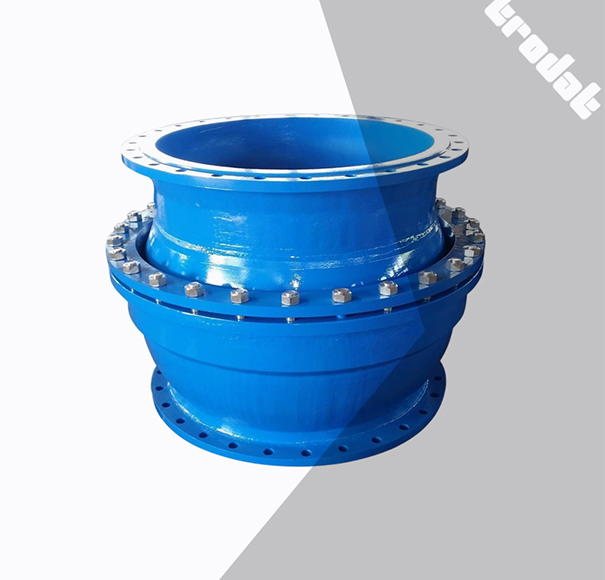
The ball joint is a connection piece for the steel mud discharge pipe at the stern of the dredging vessel to the floating rubber mud discharge pipe on the water surface. Typically the ball joint consists of inner and outer spherical surface, swivel bolts and flanges. By means of the spherical surfaces the ball joint is capable of rotating in any direction. This allows the floating pipeline to move freely on the water surface and adapt to changes in the marine environment. The connections are made of high-strength steel or special alloys, which are able to withstand the internal pressure and external forces. The ball joint is equipped with an advanced sealing system, which prevents any leakage of slurry even under continuous operation.
Operational Role in Mud Discharge Pipelines
Ball Joints allow angular movement between fixed length pipes, and are used to absorb severe bending stresses caused by uneven seabed or vessel motion. By spreading maximum pressure over all points of the joint, Ball Joints increase the life of connected pipes and reduce the risk of premature fatigue failure. Ball Joints also enable piping to expand/contract and absorb vibration which allows for consistent slurry flow rates through complex discharge configurations.
Advantages in Harsh Marine Environments
Deep-Water Dredging applications demand Ball joints of structural robustness to withstand abrasive and Corrosive properties of sediment-laden slurry flow without excessive wear. The modular design of Ball joints enables the quick and easy replacement of sealing elements on site, without the need to disassemble sections of the discharge pipeline system. This is particularly important for deep-water dredging applications where reliability is key.
What Are the Key Characteristics of Discharge Rubber Hoses?
Discharge rubber hoses are used as flexible connections between pumps, ships and pipelines of fixed configuration to transfer slurry.
Material Composition and Reinforcement Layers
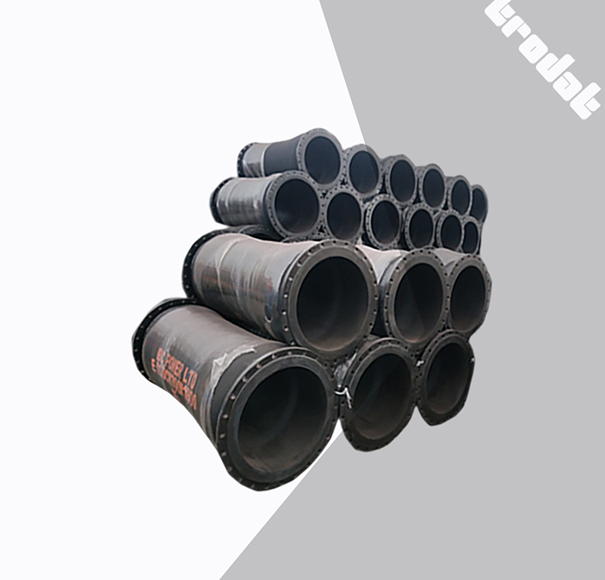
Discharge rubber hoses are available in Suction and Discharging Rubber Hose, Suction and Discharging Hose with Steel Flange, Suction and Discharging Hose with Sandwich Flange, Armored Dredging Hose etc. types. These hose are made from synthetic rubber which is reinforced with textile or steel wire layers to provide required strength at varied pressure. The inner side of hose is made abrasion resistant to handle sand, gravel and other solids in slurry. The outer cover of hose is abrasion resistant and is formulated to resist UV light, seawater and mechanical abuse from floating debris and from vessel movement.
Application Scenarios in Dredging Operations
These hoses are used as an intermediate connection between two pumps or between a shore based floating pipeline and are often very flexible. These hoses can be used for suction or discharge and are available in a variety of different construction types, such as armored or flanged. These hoses can be connected and disconnected very quickly which makes them ideal for many offshore projects.
Performance Benefits in Pipeline Systems
Discharge rubber hoses have good vibration absorption properties. These protect the adjacent equipment from operational shocks. Discharge rubber hoses are able to maintain the fluid flow and are able to withstand large fluctuations in pressure. Rubber discharge hoses are cost effective compared to rigid hoses and are very reliable under different conditions.
How Do Floating Dredging Hoses Differ from Standard Discharge Hoses?
Floating dredging hoses are made for surface application in which constant buoyancy is required during operation.
Construction Design with Buoyancy Elements
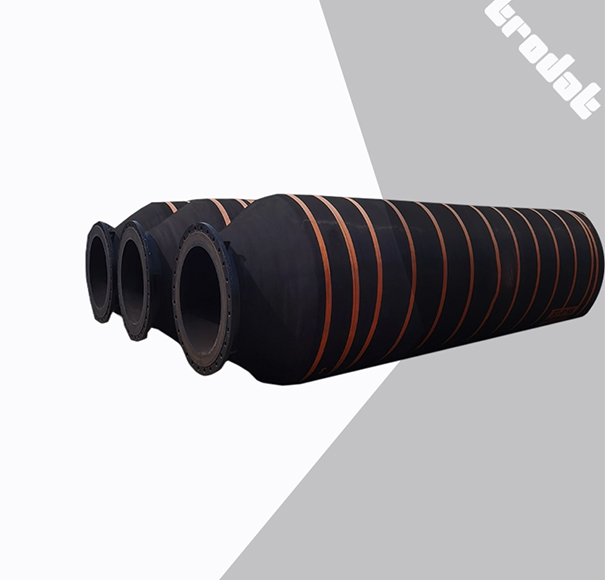
Dredging Self-floating hoses for the harshest sea or mining conditions. Dredging Self-floating hoses are equipped with a PE foam body that is adjusted to the bouyance of the dredged material. The Self-floating hoses are equipped with foam-filled outer layers or flotation collars. These integrated flotation layers provide positive buoyancy even under the heaviest slurry loads. The hoses are available in a wide range of inner diameters up to 1200mm, various lengths and pressure ranges. The reinforced internal layers are specifically designed to withstand high-pressure slurry flow. The end flanges of the hoses are designed for bolted connections to dredge pumps, floating discharge lines and other vessels.
Functional Role in Offshore Dredging Projects
Floating dredging hoses are used to keep the discharge lines of a Floating Dredge on the surface of the water, to avoid getting entangled or damaged by the seabed. In vessel repositioning operations, it is essential to be able to maneuver hoses easily. The floating dredging hoses are equipped with a buoyancy layer that reduces in thickness from one side to the other side, thus being very flexible, much more so than other floating rubber hoses. This flexibility ensures that minimum drag forces are created during operation, which has a positive effect on the energy consumption.
Operational Advantages Over Submerged Pipelines
Floating hoses are much easier to inspect and maintain as they are above water and therefore visible as opposed to submerged lines. Also, no risk of blockages by sediment etc. as there is with submerged pipes. Floating hoses are ideal for shallow water applications, where submerged lines would be impractical due to depth clearance.
How Should Engineers Select Between These Three Components?
The selection of appropriate pumping and other components is based upon project specific criteria including environmental conditions, operating depth, required flow rates and the configuration of the vessel itself.
Factors Influencing Component Selection
The pipeline layout has a say in this matter. In fixed installations preferably angular joints are to be preferred over flexible connections. But in mobile setups the opposite applies. Pressure resistance also plays a role. Ball joints are particularly suitable in high-pressure areas near pump outlets. Rubber hoses are used in medium-pressure areas that require some elasticity. Floating hoses are used in low-pressure areas where additional buoyancy support is required for their tasks. Floating assemblies are needed for very mobile installations that are frequently moved.
Integration Strategies for Optimal System Efficiency
A discharge pipe line is designed with three key elements; ball joints at critical connections, discharge rubber hoses and floating hoses. These key elements enable a hybrid approach to be adopted that maximizes the potential of a pipe line to operate efficiently in a variety of different marine environments while maintaining the integrity of the pipe line.
Why Is TRODAT (Shandong) Marine Engineering Co., Ltd. Considered a Reliable Discharge Pipeline Supplier?
TRODAT (Shandong) Marine Engineering Co., Ltd. is a globally trusted supplier, providing advanced marine engineering components such as ball joints, rubber hoses and floating systems for dredging applications.
Company Strengths and Capabilities
TRODAT as a Chinese professional supplier of dredging equipment, such as dredging equipment of Chinese famous brands or international brands as required. TRODAT designs customized parts for new built dredgers locally or for maintenance of used dredgers all over the world. Our manufacturing facilities are working under strict quality control in accordance with ISO9001 and CCS quality standards. In addition to discharge pipes we are manufacturing pumps, deck equipment, outfitting equipment, engines, generators, winches and all kind of other special instruments and accessories for all kind of marine construction.
Commitment to Long-Term Reliability and Performance Support
TRODAT is investing in the Research & Development of new materials with improved corrosion resistance and longer use life. Yes, we can send our engineer to your project site for the installation supervision and the training service. TRODAT Technical Department provides the technical support to our clients all over the world in order to assist for the installation as well as for the maintenance at field. This is a key success factor for TRODAT to build long term relation with its clients all over the world.
Summary of Key Differences Among the Three Components
| Component | Primary Function | Distinguishing Feature | Typical Application |
|---|---|---|---|
| Ball Joint | Angular flexibility & stress relief | Spherical connection allowing rotation | Deep-water or uneven seabed pipelines |
| Discharge Rubber Hose | Flexible connection & vibration absorption | Reinforced rubber construction | Pump outlet & intermediate connections |
| Floating Dredging Hose | Surface-level slurry transport | Integrated buoyancy system | Offshore floating discharge lines |
All of the elements individually are sufficient to achieve efficient transportation of slurry in marine situations. They together ensure that all sections of the pipeline are operating safely in varying hydrodynamic circumstances, with long term stability in performance and ability to function to required standards with various boats.
FAQs
What determines the lifespan of a dredging hose?
The life span of wear parts is determined by the material quality, the number of pressure slacks, the abrasive content in the slurry and the planned maintenance.
Can ball joints be used interchangeably with flexible rubber hoses?
No, both have to allow for movement in a pipeline. However ball joints allow for rotation only, no elastic deformation, for vibration damping there is no alternative to rubber hoses.
How does TRODAT ensure product compatibility across different pipeline systems?
TRODAT products are made to standard flange dimensions, yet can be made to any desired specifications enabling them to be incorporated into any marine equipment, from any manufacturer worldwide. Thus enabling consistent operation of pipelines of any configuration in dredging projects all over the world.


Post Comment