



Amphibious excavators routinely take on tasks in terrain that sinks standard equipment or leaves it unstable. The units traverse waterlogged soil and shallow depths without losing grip. Project teams handling wetland restoration, riverbed profiling, and coastal reinforcement depend on them when regular excavators lack the footing or extension needed. Flotation from welded pontoons paired with broad low-pressure treads permits navigation across marshes, swamps, intertidal zones, and narrow waterways where silt deposits or shoreline wear call for targeted intervention.
This breakdown addresses the fundamentals. It details construction elements, functional mechanics in rough settings, common field deployments, optimal operational settings tied to water levels and substrate, selection protocols for acquisition groups, and typical hurdles with field-tested corrections. Insights drawn from ongoing restoration and sediment-handling operations, aligned with sector benchmarks, guide the material so engineering leads can pair machinery with practical site constraints.
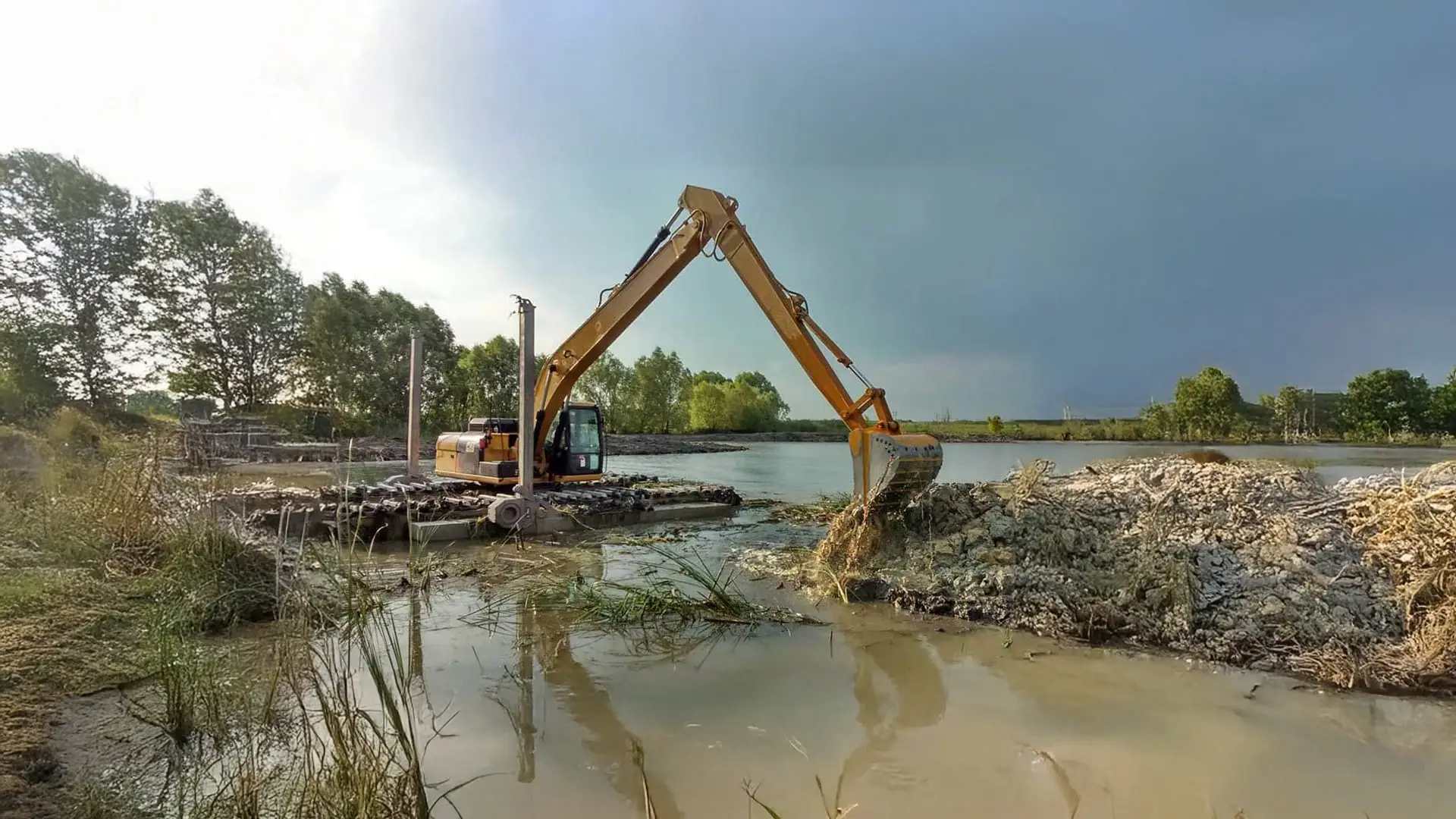
What is an Amphibious Excavator? Key Features and Design
Any amphibious excavator starts with its base structure. Welded pontoons made from salt-resistant high-strength steel supply the lift. These hulls allocate mass until contact pressure dips under 2.5 psi for standard setups—much less than what conventional tracks exert on yielding earth.
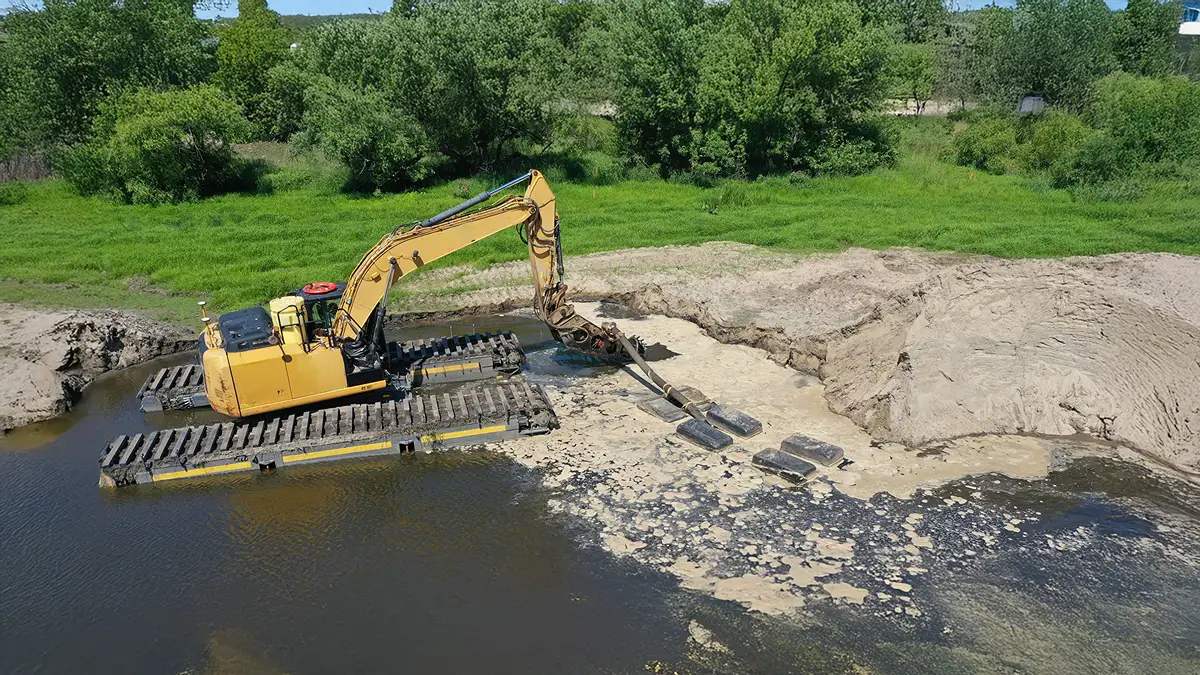
Treads align with pontoon profiles and draw straight hydraulic propulsion. Such configuration enables independent movement over dry land and through water reaching multiple feet. The rotating superstructure—boom assembly, stick, enclosed cab, and balancing mass—rests on a full-circle turntable. Stretched booms commonly extend 30 to 40 feet, offering projection over eroding edges or into confined streams.
Unlike traditional excavators, amphibious types stress base steadiness over maximum tear-out power. Hull sections sometimes permit flotation tweaks, and certain builds add deployable spuds or tie-downs to secure stance amid heavy scoops or discharges. Barrier layers and alloy fittings bolster longevity in mixed-salt or ocean-front exposures.
Units generally tip scales at 10 to 40 tons with powerplants delivering 100 to 300 horses. Fluid lines feed track drives and tool circuits, enabling swift changes between dredge heads, grabs, cutters, or high-solids slurry pumps.
How Amphibious Excavators Work in Challenging Environments
Pontoon displacement holds the rig buoyant as treads push ahead. At modest depths the volume shifted bears total mass including payload. Forward pace holds at 1 to 3 kph afloat to counter drifts from light currents.
Powerplant hydraulics pump fluid to rams and wheel motors. Chainless track drives in modern variants trim upkeep in gritty buildup. Pin-on couplers facilitate tool switches from earthmoving to fluid extraction or brush handling in short order.
Low mass center aids rollover resistance. Waterproofed controls endure brief dunks. Soil impact stays light since hulls scatter weight, leaving treads to score only faint paths that spare wetland root mats.
Site routines often launch from solid margins, push into soaked bog, span pools via flotation, then pick up tracked advance across. The fluid progression trims prep durations against fixed-platform options.
Top Applications of Amphibious Excavators
Habitat renewal in wetlands and bogs counts as a staple deployment. Long-term silt layers choke drainage as non-native growth displaces locals. Rigs carve exact ditches, reshape curves, and shift spoil for breeding platforms or raised zones. Focused extraction of thick reed beds or floating invasives gains from outreach minus repeated traversals that pack nearby ground.
Sediment clearance and stream or ditch deepening form another key sector. Bed infill cuts flow volume and boosts overflow threats. Amphibious excavators contour accurately, pulling select strata and routing mixtures to settling ponds or barriers. Pumping reaches spanning hundreds of meters prove viable with boom-mounted hydraulic units.
Edge and embankment fortification fights persistent washout along waterways, pond rims, and seaside stretches. Crews lay rock armor, reform inclines, or embed fabric liners waterward. Minimal pressure averts extra collapse in soaked fill.
Bog and fen plant control removes dense overgrowth for pathway creation, flow recovery, or site prep toward ecological uplift. Extended sticks shear and pile debris absent multipass routes that harm flanking terrain.
Overflow mitigation and post-event salvage need swift rollout. Dike bolstering, storm litter extraction, and urgent spoil relocation hinge on reaching cut-off areas. Conduit paths and service runs across bogs profit from ditching sans haulway builds.
Polluted-area cleanup demands contained material shifts to curb contaminant migration. Meticulous digging in fens checks clouding and spillover. Blended tactics—mechanical pull with inline pumping—yield complete retrieval under tight outflow caps.
Ideal Working Conditions & Suitable Environments
Water columns from 2 to 8 feet align with peak function for most amphibious excavators. Deeper runs trim balance unless added hulls or outreach apply. Yielding cohesive bases—peat beds, clay silts, wet sands—yield firm hold; pontoons block embedment where regular treads plunge.
Top spots encompass inland fens, seaside morasses, mudflats, stream overflows, lake perimeters, and shore bands with tame flow. Slight tide swings function if moorings lock placement.
Mismatches arise in open depths past 8 to 10 feet, stony beds that grind treads, or rough surf that rocks hulls. Deep freezes gel lines, while bone-dry compacts null flotation edges.
Job checklists assist: efforts amid 3 to 5 feet over loose muck suit basic hulls; stream scouring near sturdier shores favors longer arms and stronger drives. Load-bearing samples and water cycle logs must inform picks.
Step-by-Step Guide to Choosing the Right Amphibious Excavator
Kick off with ground reconnaissance. Log depth extremes, sample substrate, tally spoil quantities, and flag entry barriers.
Outline extension and tooling specs thereafter. Tight waterway shaping could require 40-foot reaches; heavy brush tasks suit custom grabs.
Gauge lift needs against rig tonnage and haul weights. Aim pressures below 3 psi in fragile fens.
Scrutinize output and locomotion. Tie power to cycle patterns—sporadic highs versus steady mids—and confirm tread velocity fits traversal.
Weave in oversight rules upfront. Fen mandates frequently call for small prints and clean burns; verify sound and release alignments.
Weigh sustainment logistics. Depot closeness and stock readiness turn vital in distant bog or shore setups.
Probe fluid meshing finally. Linkage with slurry handlers, hauls, or deck gear broadens scope for joint clearance and dig work.
Branching charts ease navigation: sort ground class first (constant soak versus periodic), pinpoint extension and tool focuses, then sync with spec sheets.
Common Challenges & How to Overcome Them
Sudden soft voids trap rigs despite prep. Flank hull add-ons or pull-out legs boost hold and curb drop.
Depth caps bind assignments. Boom slurry units stretch coverage minus nonstop shifts.
Entry pricing looms large initially. Full-run tallies often highlight gains—no temp paths, sped schedules, cut rehab outlays—that balance costs over wetland repeats.
Extended salt or harsh fluid contact speeds gasket wear. Post-job sweetwater cleans plus anodes and fresh seals stretch intervals markedly.
Off-center scoops stir vibes that stress parts. Tool mass tuning to arm limits and timed equilibrium tests spot fatigue ahead.
TRODAT (SHANDONG) MARINE ENGINEERING CO., LTD
TRODAT (SHANDONG) MARINE ENGINEERING CO., LTD focuses on sediment gear and sea-based assemblies from shops in Weifang, Shandong area, China. Fifteen-plus years in ocean tech, supported by two decades-plus of dredger fieldwork, equips the firm to furnish full kits for fresh hulls, refreshes, and yard fixes locally.
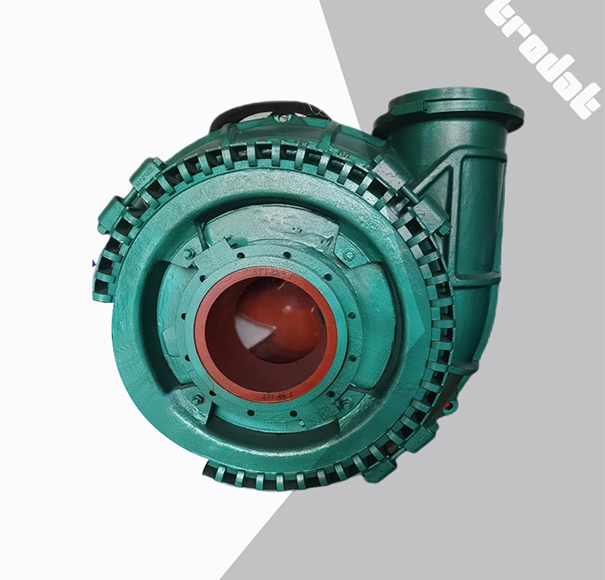
Main ranges span CUMMINS and WEICHAI diesels, sea drive boxes, self-contained fluid stations, and tailored pumps like the TDSP-C hydraulic slurry pump unit with solo or paired mixer choices. Surface hardware includes fluid hauls, powered reels, capstans, and vessel thrusters. Rigging stocks cover wire cables, drops, link chains, and tie posts. Custom gauges feature spoil output trackers and site-tuned nav arrays.
Production meets ISO9001:2015 quality benchmarks, with IACS nods for sea-rated items. Solid grasp of gearing parts to working scenes backs steady runs in gritty, dense sediment settings.
Conclusion
Amphibious excavators grant solid entry to soaked and low-depth locales beyond standard rig reach. Lift, managed contact, and tool adaptability yield smooth spoil shifts, ecological boosts, and washout checks with trimmed habitat marks. Precise tuning of unit traits to surveyed parameters lifts yield while reining hazards and spends. Acquisition crews profit from ordered checks and fluid add-on pairings for enduring job flow. Pass site stats to versed providers for setup advice fitted to fen or clearance specs.
FAQs
What is an amphibious excavator and how does it differ from a standard excavator?
An amphibious excavator employs welded pontoons for lift and broad low-pressure treads for pull, supporting steady tasks in low water and yielding fen soil where regular excavators slip or embed.
What are the main applications for amphibious excavators in wetland projects?
Key deployments involve fen renewal via silt pull and non-native control, stream bed deepening for capacity regain, edge armoring versus washout, and measured spoil lift in guarded bog zones.
What working conditions are best suited for an amphibious excavator?
Prime settings feature water layers of 2 to 8 feet, yielding soaked bases like peat or silt muck, fens, morasses, stream spreads, and mudflats where contact must remain light to spare terrain.
How do I choose the right amphibious excavator for a dredging job?
Survey depth spans, base firmness, needed arm stretch, and tools upfront, then weigh lift and drive against loads while accounting for water shifts and oversight bounds.
Can amphibious excavators handle attached dredging pumps for slurry removal?
Fluid lines on amphibious excavators allow straight slurry pump fits, facilitating dense material moves over spans in fen and low-depth clearance efforts.

Post Comment