



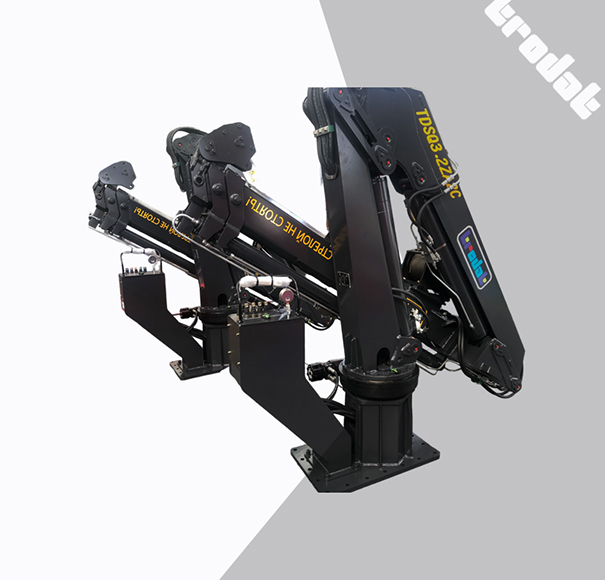
Marine knuckle boom cranes, frequently called articulated arm ship cranes in the industry, manage critical lifting tasks such as cargo transfer, equipment handling, and supply operations on vessels with restricted deck space or varying sea conditions. The selection decision revolves around three main elements: lifting weight measured as safe working load (SWL), working radius or outreach, and compatibility with actual operating conditions. Misjudging any of these often leads to reduced productivity, compromised safety margins, or substantial modification expenses down the line.
Years of field experience demonstrate that cranes aligned closely with real vessel requirements deliver dependable results across different marine environments. The sections below outline the evaluation process using standard industry approaches seen in shipbuilding and offshore projects.
Why Knuckle Boom Configurations Perform Well at Sea
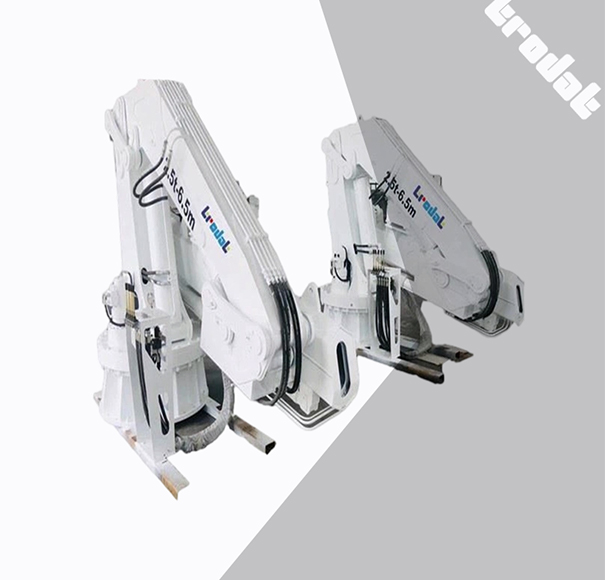
The articulated arm structure of knuckle boom marine cranes folds compactly when not in use, occupying far less deck area than straight-boom or telescopic designs. This arrangement allows accurate hook positioning even with deck obstacles present and keeps the load path closer to the vessel centerline, noticeably reducing swing during roll or pitch.
Supply vessels depend on these cranes for platform resupply work. Fishing vessels use them for repeated net and catch handling. Research ships deploy sensitive gear, and workboats perform ship-to-ship transfers in anchorages with limited depth. The proportional hydraulic control system provides the smooth response needed when sea states introduce sudden motion changes.
Assessing Safe Working Load Requirements
Safe working load indicates the maximum weight permitted at specific outreach distances. Because capacity decreases significantly as the arm extends, manufacturers provide complete load charts that show SWL at every point along the radius.
The process starts with cataloging the heaviest item lifted on a regular basis. Adding a safety margin—typically 20 to 50 percent—covers the dynamic amplification caused by vessel movement. In practice, a vessel that routinely moves 4-ton pallets in moderate seas often selects a crane rated near 6 tons at the intended radius to preserve an adequate buffer. Even modest heel angles of 5 degrees can increase stress considerably, making it essential to consult the entire load chart instead of relying on peak values alone.
In a representative 6000 kg rated articulated arm setup, available capacity at longer outreach distances drops markedly. Hydraulic systems equipped with full servo control and independent valve groups maintain effective compound movements, supporting steady performance under changing load conditions.
Determining Appropriate Outreach and Working Radius
Outreach refers to the horizontal distance from the crane’s rotation center to the hook. Knuckle boom marine cranes gain an advantage here by using articulated sections to extend reach while still folding tightly when stowed.
Minimum radius becomes important for lifts close to the vessel side, whereas maximum outreach governs coverage over broad decks or to nearby barges. Configurations providing 5 to 22 meters of lift height with multi-section arms offer practical versatility. General arrangement plans supply the necessary measurements: distance from the planned pedestal position to the farthest lifting point, plus allowances for vessel beam and operational clearance.
Dual-side operations, common on supply vessels, require outreach sufficient for both port and starboard simultaneously. Boom designs incorporating multiple hydraulic cylinders help hold hook height stable while radius changes, limiting load swing. Pedestal dimensions and slew ring specifications also influence stability; larger foundations improve resistance to tipping moments but demand corresponding deck strengthening.
Ensuring Compatibility with Operating Conditions
Sea state tolerance remains one of the most frequently under-evaluated factors. Allowable heel and trim angles differ across models, from 5°/2° in protected waters to 15°/10° in open offshore conditions. Designs rated for higher angles incorporate reinforced construction and improved hydraulic damping to manage motion effectively.
The vessel’s primary function shapes parameter priorities. Fishing operations favor quick deployment and short-radius capability for frequent lifts. Offshore wind support vessels need greater outreach and higher safe working load to position turbine sections in demanding environments. Supply vessels require continuous 360-degree rotation and robust slew bearings to support frequent repositioning.
Classification society certifications—CCS, ABS, BV, DNV, and others—must correspond to the vessel’s flag state and intended area of operation. These approvals cover dynamic load factors, corrosion resistance measures, and electrical safety provisions for classified spaces.
Environmental extremes require specific adaptations. Cold climates necessitate low-temperature hydraulic fluids. Prolonged exposure to salt air benefits from multi-coat protection systems and corrosion-resistant components to maintain long-term integrity.
Step-by-Step Evaluation Approach
Compile a clear operational summary at the outset. Document principal vessel dimensions, typical cargo weights, expected sea states, and available mounting space.
Develop a load-radius diagram that plots the heaviest loads against their required distances from the pedestal. Compare these requirements against candidate load charts to find models offering sufficient capacity reserves across the working envelope.
Verify sea state alignment using the vessel’s stability documentation. Include wind speed limitations, since higher conditions increase swing forces and may justify active heave compensation in more advanced configurations.
Evaluate power supply arrangements. Electric motors or diesel generators drive the hydraulic system; an 11 kW motor setup provides reliable hoisting speeds of 45 m/min and slew rates up to 28 r/min, suitable for vessels with non-continuous electrical generation.
Confirm physical installation details. Pedestal size, slew ring type, and mounting hardware must match deck structure capacity. Four-way central slew mechanisms support uninterrupted 360-degree rotation without cable management issues.
Consider optional features where relevant. Dual-mode power systems with independent pump sources enhance flexibility for vessels facing inconsistent energy availability.
Representative Ranges by Vessel Type
Practical data collected from marine operations reveals consistent patterns.
Nearshore vessels and fishing craft generally work within 1–8 tons safe working load and 6–12 meters outreach, with heel limits around 5°/2°. Compact stowing prevents conflicts with deck equipment.
Medium-duty supply and workboats commonly handle 10–30 tons across 12–25 meters outreach, accommodating 10°/5° heel in moderate conditions. Capability for two-side handling improves workflow efficiency.
Heavy offshore duties, including wind farm support, typically require 30–80 tons or more with 20–40 meters outreach and 15°/10° heel tolerance. Active compensation frequently becomes necessary for controlled lifts in exposed locations.
These figures serve as practical starting points; final specifications require detailed load studies and engineering confirmation.
Observed Performance in Real Applications
Coastal supply vessels transferring 6-ton loads from barges in constrained ports often rely on a 6000 kg rated articulated arm with 22-meter lift height and 5m×5 configuration. Hoisting at 45 m/min combined with 28 r/min rotation supports productive cycle times. Diesel generator power fits vessels without permanent electric supply.
Research vessels lowering subsea equipment need accurate control at short radii to avoid damaging sensitive instruments. The knuckle design’s tight folding preserves deck space needed for laboratories and auxiliary winches.
These examples illustrate how well-chosen parameters support everyday tasks more effectively than oversizing based on theoretical maximums.
Preventing Typical Selection Mistakes
Focusing solely on maximum safe working load without considering radius-specific reductions leads to capacity shortfalls. Complete load charts remain indispensable.
Dynamic forces from vessel motion are frequently underestimated. Calculations based on static conditions alone miss the real load amplification in seaway.
Insufficient attention to stowed dimensions results in cranes that hinder other deck activities. Precise measurement of folded size prevents later conflicts.
Certification discrepancies cause delays during surveys and classification. Confirming applicable society approvals early avoids rework.
Long-term serviceability suffers when component access is poor. Designs that allow straightforward maintenance improve availability in distant operating areas.
TRODAT (SHANDONG) MARINE ENGINEERING CO., LTD
TRODAT (SHANDONG) MARINE ENGINEERING CO., LTD concentrates on marine equipment designed for reliability under demanding conditions. Located in Weifang, Shandong, the company applies accumulated experience in marine and associated fields. Its product range includes hydraulic deck machinery such as articulated arm ship cranes built for harsh marine environments.
Production follows ISO9001:2015 quality management standards, with classification society approvals available from major organizations. Established domestic supply chains support consistent manufacturing quality and delivery performance. Emphasis rests on customized configurations that meet specific operational demands, informed by practical industry exposure over multiple years.
Conclusion
Marine knuckle boom crane selection requires careful alignment of safe working load, outreach, and operating conditions with the vessel’s genuine working profile. Equipment chosen with these factors in mind improves safety, cycle efficiency, and overall cost management throughout its service period. Systematic review of load charts, sea state limits, and installation requirements produces cranes that perform consistently in actual marine service. Close attention to these details ensures dependable operation across a wide range of applications.
Frequently Asked Questions
How is the correct safe working load determined for a marine knuckle boom crane?
Identify the heaviest load handled regularly, then apply a 20–50% safety factor to cover dynamic effects from vessel motion. The full load chart must confirm adequate capacity at the planned outreach distance. A 6000 kg rated crane commonly proves effective for mid-range supply operations when loads stay within the documented radius envelope.
What outreach distance is typically needed for a knuckle boom marine crane?
Measure from the pedestal rotation center to the farthest lift location, including safety clearance. Arm configurations offering up to 22 meters lift height with 5m×5 sections deliver flexibility for short-radius and extended lifts while folding compactly when stowed.
Which operating conditions are most important when choosing a ship crane?
Allowable heel and trim angles should correspond to the vessel’s stability characteristics and expected sea states. Appropriate classification society certifications verify compliance. Proportional hydraulic systems manage moderate rolling effectively, with higher-rated models supporting exposed offshore work.
Does a marine articulated arm crane function reliably on diesel generator power alone?
Diesel generators provide standard power for many configurations. An 11 kW motor setup delivers consistent 45 m/min hoisting and up to 28 r/min rotation, making it suitable for vessels without continuous main electrical generation.
Why does the knuckle boom design help control load swing during rough seas?
The articulated arm maintains the hook position closer to the vessel centerline throughout the lift, reducing pendulum motion induced by roll and pitch. Automatic winch brakes combined with servo-controlled hydraulics further stabilize the load when sea conditions vary suddenly.

Post Comment