



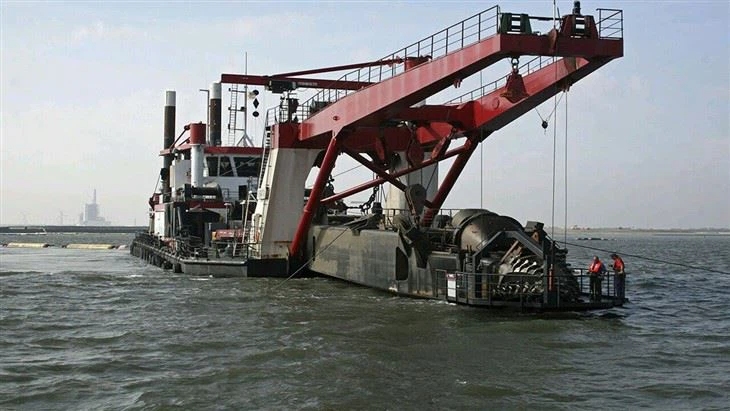
In dredging, the hardest decisions are rarely about equipment names. They are about risk. About soil that behaves differently once excavation starts. About whether a production estimate will still hold after the first two weeks on site. The cutter suction dredger sits right in the middle of those decisions.
It is one of the most widely used dredging vessels in the world, and at the same time, one of the most misunderstood. Some projects depend on it. Others struggle because it was chosen for the wrong reasons. Knowing what a cutter suction dredger really does, and when it actually fits a project, is less about theory and more about judgment.
What a Cutter Suction Dredger Really Is
On paper, a cutter suction dredger is easy to describe. A rotating cutter head loosens the seabed. A dredging pump moves the material as slurry through a pipeline. The vessel stays in position using spuds and anchors.
That description is correct, but it misses the point.
What defines a cutter suction dredger is not the cutter itself. It is the level of control the system provides. The dredger does not rush through an area. It works methodically, cutting, pumping, and adjusting in small increments. That is why cutter suction dredgers remain common in projects where mistakes are expensive.
How a Cutter Suction Dredger Works on Site
In real projects, the cutter suction dredger working principle becomes a balancing act. Cutter head torque, rotation speed, pump capacity, and slurry density all interact. Change one, and the others respond.
In compact clay, the cutter must do enough work to break cohesion, but not so much that wear becomes excessive. In mixed soil, consistency matters more than peak output. The dredging pump then has to move that material through pipelines that may stretch for kilometers, often with limited room for rerouting.
When a cutter suction dredger performs well, it is usually because these details were addressed early, not adjusted after production dropped.
Where Cutter Suction Dredger Applications Make Sense
Cutter suction dredger applications are rarely chosen for convenience. They are chosen because alternatives fall short.
In port dredging, sediment is often layered and compacted. Over time, vessel traffic compresses material into something closer to clay than sand. Cutter suction dredgers handle this reliably, especially when final depths must be accurate within tight tolerances.
River dredging presents a different challenge. Channels are narrow, currents shift, and soil conditions can change within a few hundred meters. A cutter suction dredger can stay stable in these environments and maintain a controlled dredging profile.
Land reclamation projects also favor cutter suction dredgers when material needs to be pumped directly to the fill area. Fewer transfer steps usually mean fewer delays, provided slurry concentration is properly managed.
When Is a Cutter Suction Dredger the Right Choice?
This question comes up repeatedly, and the answer is never a simple yes or no.
Soil Conditions Usually Decide First
If investigations show compact clay, cohesive silt, or mixed layers, a cutter suction dredger often becomes the practical choice. Pure suction systems can lose efficiency quickly in these materials. Mechanical cutting keeps production predictable.
For cohesive soil, predictability often matters more than headline production numbers.
Long Discharge Distances Change Priorities
When dredged material must be transported far from the excavation area, cutter suction dredger long distance pumping becomes critical. With properly selected pumps and pipelines, slurry can travel several kilometers without interruption.
This is common in reclamation work or confined disposal projects where barges are not an option.
Precision Is Often Undervalued
In channel deepening or trench dredging, precision directly affects cost. Over-dredging creates extra handling and rework. Because cutter suction dredgers operate from a fixed position, operators can maintain tighter control over depth and alignment.
In many projects, this control offsets higher initial investment.
Environmental Limits Are Now Part of the Decision
Environmental constraints are no longer secondary. Cutter suction dredgers can be adapted with suitable cutter designs and operating methods to reduce turbidity. When managed properly, they are used in projects where sediment control is closely monitored.
When a Cutter Suction Dredger Is Not the Best Tool
Despite their strengths, cutter suction dredgers are not universal. In very loose sand across large open areas, trailing suction hopper dredgers often achieve higher daily output. In small maintenance projects, grab dredgers may be easier to mobilize.
Recognizing these limits early helps avoid unnecessary adjustments later.
The System Matters More Than the Vessel
A cutter suction dredger should never be evaluated in isolation. Cutter head selection, pump configuration, pipeline routing, and maintenance planning all influence results.
Projects that perform consistently tend to involve early technical coordination and realistic expectations. Those that struggle often focus on vessel size alone.
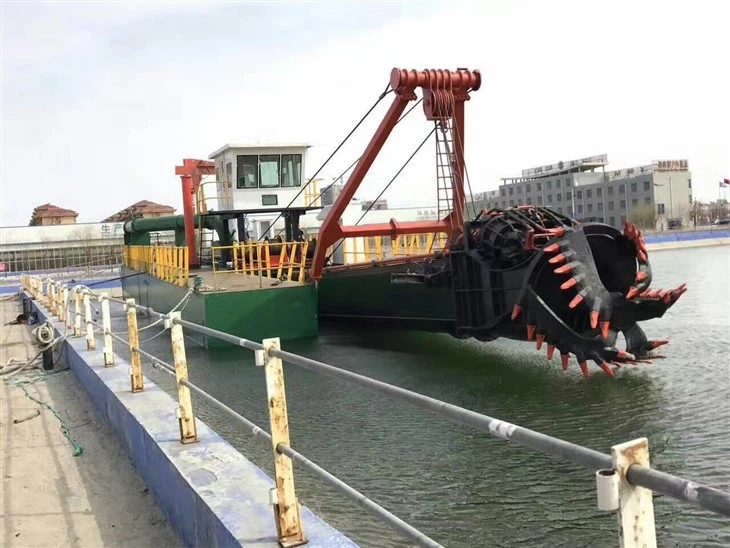
TRODAT (Shandong) Marine Engineering Co., Ltd.
TRODAT (Shandong) Marine Engineering Co., Ltd. works with contractors and project owners involved in marine and inland waterway dredging. Based in Shandong, China, the company supplies cutter suction dredgers, dredging components, and technical support for projects with demanding operating conditions.
With more than twenty years of experience in dredging-related equipment, TRODAT focuses on adapting cutter suction dredger systems to real site requirements. This includes cutter head matching, pumping system configuration, and support during installation and operation, helping projects maintain stable performance over time.
Conclusion
The reason why a cutting suction dredger can gain a foothold is that it is good at doing one thing: providing precise and controllable dredging operations under complex conditions and with limited room for error. When the soil is sticky, the discharge distance is long, and accuracy is crucial, it often performs its function effectively. Understanding this background situation is the key to distinguishing between effective planning and high costs of correction.
FAQs
What is a cutter suction dredger commonly used for?
A cutter suction dredger is commonly used for port dredging, river dredging, land reclamation, and channel deepening, especially where compact clay or cohesive soil is present.
When should a cutter suction dredger be selected?
Knowing when to use a cutter suction dredger depends on soil conditions, required accuracy, and slurry transport distance. It is often selected when mechanical cutting and controlled pumping are both necessary.
Can a cutter suction dredger handle long pipeline discharge?
Yes. With appropriate pump selection and pipeline design, cutter suction dredgers are suitable for long distance pumping in reclamation and disposal projects.
How do soil conditions affect cutter suction dredger performance?
Soil conditions influence cutter head design, wear rates, and production stability. Cutter suction dredgers perform particularly well in compact clay, cohesive silt, and mixed soil environments.

Post Comment