



Submersible slurry pumps tackle demanding tasks in industrial settings, managing abrasive blends of water, sand, gravel, and fines across extended runs or tight quarters. In dredging operations, mining tailings disposal, or marine sediment handling, mismatched equipment results in repeated failures, rapid deterioration, or inadequate throughput. Proper submersible slurry pump selection, especially models equipped with durable agitators, maintains steady performance and reduces interruptions along with part replacements.
This resource outlines critical steps for choosing wisely. It relies on hands-on site knowledge and established standards to assist procurement specialists and field engineers in pinpointing pumps that align with operational realities. Emphasis falls on hydraulic-powered variants built for severe conditions where dependable energy transfer proves essential.
Understand Your Slurry Properties First (The #1 Mistake People Make)
Slurry composition drives almost all subsequent choices. Begin with precise measurements of the material at hand. Solids size spread emerges as pivotal—assess peak lump dimensions beside d50 and d80 figures to ensure unobstructed passage through the pump. Dredging rivers frequently involves aggregates reaching 50-80 millimeters, whereas mine tailings often feature smaller yet sharply erosive grains.
Concentration of solids, expressed in weight or volume percentages, alters flow behavior and overall effectiveness. Dilute mixtures below 20 percent solids flow much like plain water, but denser loads exceeding 40 percent necessitate vigorous stirring to avert buildup. Mixture density, usually ranging from 1.2 to 1.8 in typical sediment removal, shapes power needs and lift capacity. Erosion potential, tied to mineral hardness like quartz ratings on Mohs, hastens degradation of rotating parts and housings without suitable countermeasures.
Chemical balance via pH and thermal conditions complicate matters in slurries from industrial processes. Environments under pH 5 or over 9 call for alloys tougher than basic high-chrome builds. Heat variations, uncommon though they are in underwater placements, affect sealing integrity and drive cooling.
Categorization aids quick assessment: light-duty handles gentle abrasives, medium suits routine dredging, heavy manages concentrated mining flows, and extreme heavy copes with oversized jagged debris. Overlooking this foundation commonly yields restricted channels or weak defenses against wear, triggering jams soon after startup.
Determine Required Flow Rate & Total Dynamic Head (TDH)
Capacity and pressure requirements anchor performance goals. Derive needed volume from workload scale and schedule—for clearing a 10,000 cubic meter basin within two days, aim for 200-300 cubic meters per hour sustained. Account for sporadic runs or surges during digging phases.
Full dynamic head sums vertical elevation from intake to outlet, pipe resistance, and speed-related components. Resistance escalates in extended conduits carrying particle-laden fluids—approximate with adjusted Darcy-Weisbach or Hazen-Williams methods factoring in thickened consistency. A hundred-meter line incorporating turns might impose 10-20 extra meters of equivalent pressure in gritty streams.
Conduit sizing governs internal speeds; maintaining 2-3 meters per second curbs deposition without inviting undue scouring from faster currents. Consider a sediment extraction setup moving 150 cubic meters hourly via 150-millimeter tubing over 30 meters rise plus 200 meters flat: post-adjustments, 35-45 meters total pressure often applies.
Aligning these metrics to operational graphs positions duty near peak efficiency, curbing power draw and controlling erosion rates.
Choose Pump Type: Hydraulic vs Electric Submersible
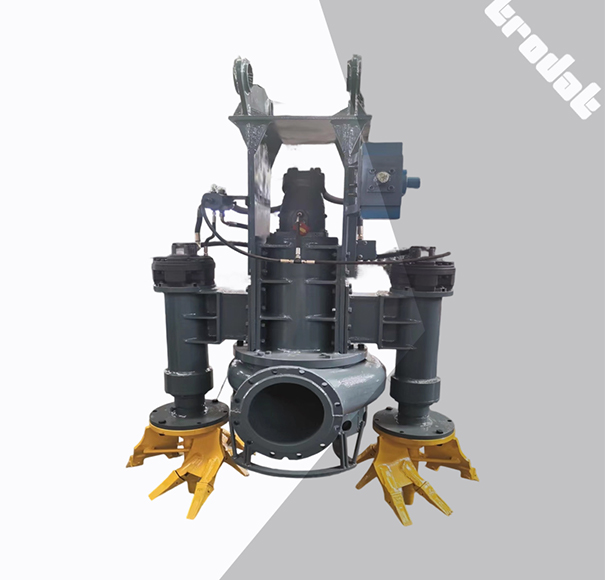
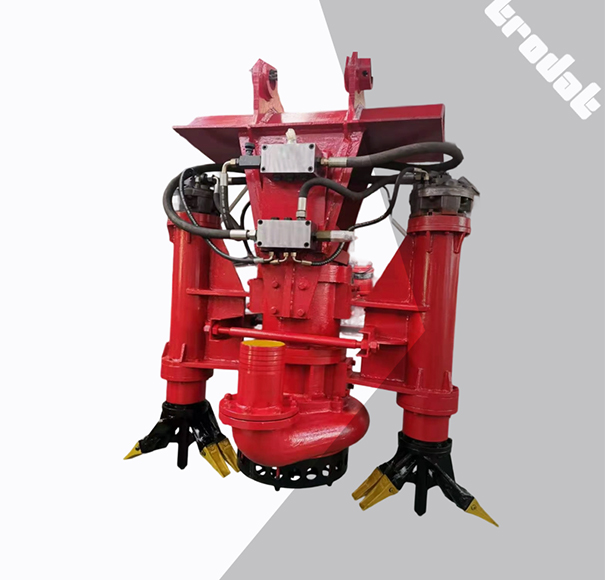
Energy delivery method distinguishes practical alternatives in isolated or risky locations. Hydraulic submersible slurry pumps source force from machinery circuits or standalone units, bypassing wires in damp, volatile, or deeply flooded zones. These shine in scenarios demanding portability—mount on digger arms for targeted deployment in confined watercourse cleanups.
Electrically driven versions simplify fixed-position setups with consistent utilities, yet wiring constraints cap immersion depth and heighten dangers amid conductive media. Hydraulic systems sustain even force amid fluctuating resistances, incorporating safeguards through pressure limits.
Stirring setup warrants close review. Solo agitators manage average sedimentation, whereas paired agitators address thick or packed substrates by inducing potent swirling to lift settled matter. In seafloor tasks with stratified deposits, dual mixers commonly enhance intake density twofold.
Material & Construction: Wear Resistance That Actually Lasts
Contact surfaces endure relentless particle assault. Elevated chromium content alloys, around 26-28 percent, in rotors and scrolls withstand grinding superior to ordinary iron castings—operational records indicate triple to quintuple durability in silica-dominant mixes.
Enclosure layouts integrate swappable inserts at high-impact spots. Dual barrier seals with lubricant reservoirs shield drives from intrusion, complemented by heat detectors to prevent damage in restricted flows. Fully sealed housings rated IP68 tolerate endless underwater exposure.
For severe grinding, explore blended steels or synthetic coatings, although chromium-enriched formulas dominate marine and extraction roles. Build precision—accurate fabrication and equilibrated assemblies—dampens oscillations and prolongs support components.
Step-by-Step Selection Process (Your Actionable Checklist)
Adhere to these seven phases sequentially for reliable outcomes.
- Record slurry attributes thoroughly—particle dimensions, density levels, gravity, grinding factor, acidity.
- Compute exact throughput and dynamic head, incorporating conduit drags and buffer allowances (10-20 percent).
- Settle on propulsion—hydraulic for distant or machine-linked duties, electric for stationary arrangements.
- Validate clearance accommodates largest grains; affirm mixing necessity per deposition risks.
- Pick compositions suiting erosion intensity—chromium-heavy as baseline for rigorous service.
- Verify energy demands against supplied hydraulics or electrics; examine output profiles.
- Appraise setup logistics, upkeep pathways, and component sourcing for ongoing viability.
A branching diagram streamlines navigation: initiate from mixture grade, diverge to energy form, then pinpoint via pressure-volume overlap on capability plots.
Common Selection Mistakes & How to Avoid Them
Excess capacity squanders resources and hastens breakdown from suboptimal running; insufficient scale invites voiding or drive strain. Cross-reference always with true circuit profiles over mere specs.
Disregarding mixer essentials in prone-to-layering fluids causes intake starvation—twin stirrers frequently mitigate in thick contexts.
Opting for wired units in erratic supply areas invites shutdowns; fluid-driven bypasses such pitfalls outright.
Downplaying line drags overstates needed lift—survey physical paths and apply cautious multipliers.
Site histories demonstrate shifting to aptly stirred, chromium-fortified units slashed swap-outs by 40-60 percent across extraction groups.
TRODAT (SHANDONG) MARINE ENGINEERING CO., LTD
TRODAT (SHANDONG) MARINE ENGINEERING CO., LTD concentrates on dredging gear and oceanic innovations, operating from Weifang bases in Shandong province, China. Efforts center on delivering integrated packages for fresh vessel builds, overhauls, and sustainment of active fleets. Primary lines encompass sediment pumps, power hubs, hoists, and niche tools such as depth profiling kits.
Boasting more than 15 years in aquatic machinery, TRODAT complies with ISO9001:2015 protocols and supplies IACS-approved items for sea-bound uses. Proficiency in adapting setups to terrain specifics guarantees steadfast function in tough arenas. The TDSP-C hydraulic slurry pump assembly embodies this methodology, offering steady delivery in arduous sediment extraction and relocation endeavors.
Conclusion
Pinpointing an appropriate submersible slurry pump hinges on correlating slurry specifics, hydraulic dynamics, and field truths. An aptly picked device—particularly hydraulic with proficient agitators—furnishes uniform transport, combats degradation, and curtails unscheduled halts. Investing effort upfront yields returns via diminished running expenses and stretched maintenance cycles. Submit job details for customized dimensioning assistance.
FAQs
How do I calculate the right flow rate for a submersible slurry pump in dredging?
Establish site volume and target completion window, then incorporate margins for fluctuating scenarios. Clearing 5,000 cubic meters in a day suggests 200-250 cubic meters hourly minimum, refined by transport resistances and density shifts.
What agitator type is best for high-concentration slurry in mining tailings?
Paired agitator arrangements excel in sticky or compacted loads over 30-40 percent solids. They produce intensified blending to reintroduce particles, boosting draw effectiveness beyond solo mixer variants.
Why choose a hydraulic submersible slurry pump over electric for marine projects?
Hydraulic designs omit extended cabling, mitigate shock threats in moist zones, and mesh seamlessly with heavy equipment for adaptable spotting in outlying or unsteady venues.
How important is high-chrome alloy in submersible slurry pump selection?
Vital for gritty media—raised Cr proportions (26-28 percent) markedly prolong rotor and enclosure spans, typically tripling to quintupling endurance over baseline options in aggregate-laden duties.
What common mistake leads to short pump life in submersible slurry applications?
Operating away from optimal efficiency due to flawed dynamic head estimates or mismatched volumes prompts undue abrasion, voids, or excess heat—consistently align circuit graphs with onsite realities.

Post Comment