



In dredging projects, pump selection is often treated as a technical detail. In reality, it is one of the most common sources of schedule pressure, cost overruns, and post-commissioning frustration. On paper, a dredging pump may appear fully capable—flow rate looks right, head seems sufficient, power margin exists. Then the project starts, discharge distance falls short, wear accelerates, and operators begin compensating with valve adjustments just to keep material moving.
The core issue is rarely the pump itself. Most dredging pump problems are system problems. Slurry behavior, pipeline layout, operating rhythm, and long-term wear all influence whether a pump performs as expected once real soil and water enter the system.
This article looks at dredging pump and slurry transport from a field-driven perspective. Instead of repeating catalog data, it focuses on how dredging systems behave after weeks and months of operation, where assumptions usually break down, and how engineers can reduce risk before equipment is ordered.
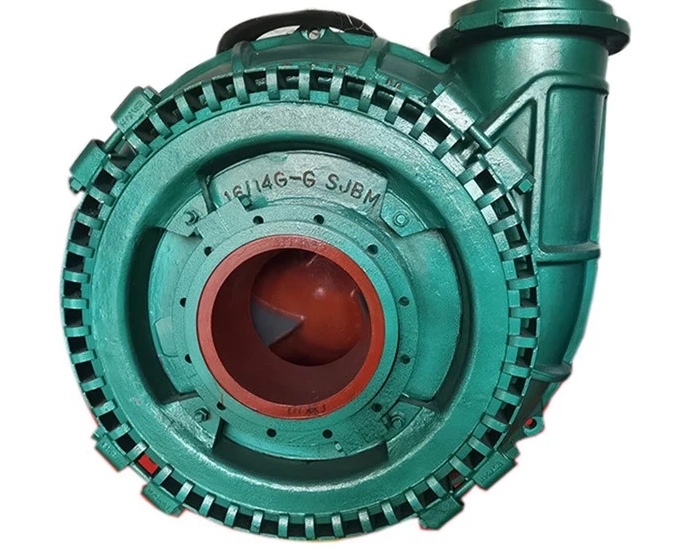
Why Dredging Pump Selection Is Rarely Just About the Pump
In many projects, discharge distance becomes the first red flag. When material does not reach the intended placement area, the immediate conclusion is often that the pump is undersized. More power is added, or a larger pump is proposed. Sometimes this solves the issue. In many cases, it only shifts the problem elsewhere.
A dredging pump does not operate in isolation. Its performance depends on how slurry is created at the cutter or suction point, how evenly it enters the pump, how it travels through the pipeline, and how conditions change during daily operation. When any of these elements drift, the pump’s operating point moves with them.
Experienced dredging engineers learn early that a pump selected purely from clean-water curves may look perfect on paper and still struggle in service. That is why successful projects focus less on individual pump ratings and more on whether the entire slurry transport system is balanced and forgiving.
Slurry Is Not a Constant, and That Matters
Slurry is often reduced to a single design value, usually density. In the field, slurry rarely behaves that politely.
Density Fluctuates More Than Expected
During river or port dredging, slurry density changes with digging depth, soil layers, operator technique, and water inflow. A system designed for a narrow density window may spend a large portion of its operating time outside that range. When density rises, pump load increases and efficiency drops. When density falls, velocity may decrease and settling risk increases.
Projects that assume a stable average density often underestimate how much margin is needed to stay productive during peak conditions.
Fine Content Changes Pump and Pipeline Behavior
Two slurries with the same density can behave very differently. Fine particles increase viscosity, affect settling velocity, and often accelerate internal wear. They also make restarts more difficult after shutdowns, especially in long pipelines.
In practice, unexpected fine content is a common reason why pump performance declines faster than planned. The pump may still run, but output slowly drops, making the issue harder to diagnose.
Settling and Restart Are Real Operating Risks
Long discharge pipelines introduce another challenge: what happens when flow stops. In fine-rich or high-solids slurry, material can settle quickly in horizontal sections. Restarting against partially settled slurry increases torque demand and can trigger vibration, cavitation, or mechanical stress.
Designing for slurry transport means considering not only steady operation, but also how the system behaves during stops, delays, and restarts.
How Dredging Pumps Actually Perform With Slurry
Catalog curves describe clean-water performance. Slurry changes the picture.
Operating Point Shifts Under Load
When pumping slurry, effective head drops while power demand increases. The pump often operates away from its best efficiency point, sometimes by a wide margin. This explains why a pump that appears adequate during design may struggle to meet discharge targets once real material is involved.
Good designs accept this reality and allow room for operating point movement rather than assuming ideal conditions.
Wear Is Gradual but Relentless
Wear does not usually cause sudden failure. It causes slow performance loss. As impeller and liner clearances grow, internal leakage increases and effective head declines. Operators compensate by pushing the system harder, which often accelerates wear further.
Projects that plan only around “new pump” performance often underestimate how quickly output can decay. Planning for wear means planning for how performance changes over time, not just at startup.
Cavitation Has Multiple Causes
Cavitation in dredging pumps is rarely caused by a single factor. Suction conditions, entrained air, fluctuating slurry levels, and transient flow all contribute. Even when calculated NPSH margins look acceptable, real-world conditions can still trigger cavitation.
Early signs usually appear as noise, vibration, or abnormal wear rather than immediate failure.
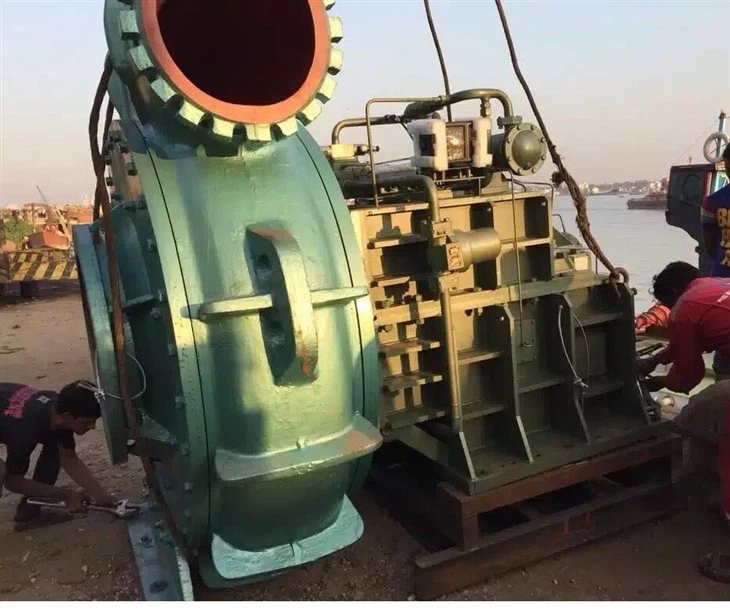
Pipeline Design: Where Performance Is Often Lost
If the pump provides energy, the pipeline determines how much of that energy reaches the discharge point.
Diameter and Length Must Be Balanced
Longer pipelines increase friction losses, but diameter selection is just as important. Smaller diameters raise velocity and wear, while larger diameters reduce velocity and increase settling risk. There is no universal rule. The correct choice depends on slurry properties, operating rhythm, and acceptable wear rates.
Bends and Elevation Changes Add Up
In real projects, pipelines include bends, reducers, vertical lifts, and flexible connections. Each adds loss. A small number of poorly placed bends can consume a significant portion of available head, especially in dense slurry transport.
These losses are often underestimated during early design stages and only become visible once production data is reviewed.
Rigid Pipe and Flexible Hose Each Have a Role
Rigid HDPE pipe offers lower friction and longer service life but requires careful alignment. Rubber hose provides flexibility for floating or mobile sections but introduces higher losses and faster wear. Most systems use both, and the transition points deserve careful attention.
Why Discharge Distance Calculations Miss the Mark
Discharge distance is one of the most searched topics in dredging pump design, yet also one of the most misunderstood.
Assumptions That Rarely Hold
Design calculations often assume constant density, smooth internal surfaces, and steady flow. In practice, density varies, internal wear roughens surfaces, and operation is rarely steady for long.
Each deviation reduces margin.
Pilot Results Do Not Tell the Whole Story
Pilot tests provide useful insight, but they rarely capture long-term wear, full pipeline complexity, or operational variability. Projects that rely too heavily on pilot data without adjustment often face surprises during scale-up.
Early Indicators Are Often Ignored
Rising power consumption, declining flow, increased vibration, and frequent valve adjustments are early warnings. Addressing these signals early can prevent more serious issues later in the project.
Matching Pump Configuration to Application Reality
Different dredging applications place different demands on the pump system. Long-distance transport, abrasive material, or limited installation space all influence what configuration makes sense.
In some cases, adding booster stations or modular pumping stages produces more stable results than oversizing a single pump. The key is understanding where system losses occur and how they evolve over time.
This system-level approach is reflected in how TRODAT (Shandong) Marine Engineering Co., Ltd. supports dredging pump applications. Rather than focusing only on individual pump units, practical project experience across dredgers, pipelines, and auxiliary systems allows solutions to be adapted to real operating conditions, including wear behavior and maintenance access.
What Engineers Should Check Before Final Pump Selection
Before finalizing a dredging pump, it helps to step back and challenge assumptions. What density range is truly realistic? How variable is particle size? How long is the pipeline, and how will it change as the project progresses? Can the system tolerate performance decay, or is redundancy required?
Just as important is recognizing when system-level support is needed. In complex projects, early engineering input often prevents costly late-stage modifications.
Why Integrated System Thinking Pays Off
Dredging projects rarely fail because a pump is poorly built. They fail because system behavior was oversimplified. When pump performance, slurry properties, pipeline design, and maintenance reality are considered together, outcomes become more predictable.
That predictability matters. It stabilizes production, controls operating cost, and reduces downtime risk.
About TRODAT (Shandong) Marine Engineering Co., Ltd.
TRODAT (Shandong) Marine Engineering Co., Ltd. supplies dredging equipment and marine engineering systems for a wide range of waterway projects. With long-term involvement in dredging applications, the company provides dredging pumps, slurry transport components, and supporting equipment aligned with real operating conditions rather than idealized averages.
By combining equipment supply with application-focused engineering support, TRODAT works with clients in river dredging, port maintenance, environmental remediation, and marine construction to bridge the gap between design assumptions and field performance.
Conclusion
A dredging pump that looks perfect on paper can struggle in the field if the surrounding system is misunderstood. Slurry variability, pipeline losses, wear progression, and operating discipline all influence results. Projects that treat dredging pump selection as a system decision—not a component purchase—are far more likely to achieve stable discharge distance and predictable production.
For decision-makers, the practical lesson is straightforward: design for how the system will behave after months of operation, not just how it performs on day one.
FAQs
What is the most common mistake in dredging pump selection?
The most common mistake is selecting a dredging pump based solely on clean-water performance without fully accounting for slurry variability, fine content, and pipeline losses in real operation.
Why does a dredging pump fail to reach the planned discharge distance?
Discharge distance issues usually result from underestimated system losses, changing slurry properties, or performance decay due to wear, rather than insufficient pump power alone.
How does slurry density affect dredging pump performance?
Higher slurry density increases power demand and reduces effective head. Fluctuating density moves the pump away from its preferred operating range, affecting efficiency and wear.
When should booster pumps be considered in slurry transport systems?
Booster pumps are typically considered for long-distance slurry transport when a single pump cannot maintain stable flow without excessive wear or energy use.
How can dredging pump wear be managed during long projects?
Wear can be managed by selecting appropriate materials, operating within realistic ranges, monitoring performance trends, and planning maintenance intervals based on expected wear behavior.

Post Comment