



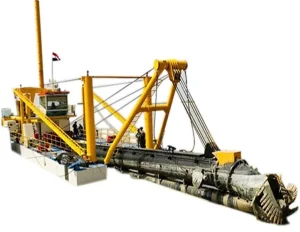
Here’s a scene that’s way too common on dredging projects. You’ve got a machine that looks the part on paper—big horsepower numbers, all the right components. But on site, it’s struggling to hit its production targets while the fuel tank needle just drops. Frustrating, right? The issue often isn’t a lack of raw power. It’s something more subtle, buried in the machine’s DNA: a basic disconnect between the engine pumping out the power and the pump that’s supposed to turn that into yardage.
For anyone running a cutter suction dredger, the real measure of performance—and what makes or breaks your project budget—isn’t found in a list of individual specs. It comes down to one thing: how perfectly the power plant and the dredge pump are tuned to work as one unit. When that integration is off, you’re not just losing a bit of efficiency. You’re watching your profit margin get pumped out with the slurry.
When Curves Collide: The Real Reason Your Output Lags
To understand why so many dredgers leave 20–40 % of their potential production on the table, you have to look at curves.
Every dredge pump has a performance curve: flow on one axis, head on the other. Somewhere on that curve sits the Best Efficiency Point (BEP) — the sweet spot where the pump moves the most slurry for the least amount of power. That’s where you want to live.
Your diesel engine has its own curve. It shows brake horsepower versus rpm, and — more importantly — specific fuel consumption in g/kWh. Engines are happiest and most fuel-efficient when they run steady at 75–90 % load, right in their prime-power band.
The problem comes when these two curves don’t line up.
Case 1 – The one that really hurts: “small engine, big pump”
Take a pump that needs 850 kW at the shaft to reach its BEP on your pipeline. Pair it with a 700 kW engine and the result is predictable and ugly. The engine goes to 100 % load immediately, governor wide open, black smoke pouring out, EGTs climbing into the danger zone. You still never reach the pump’s sweet spot, so flow is lower than planned, wear rates skyrocket (especially on the impeller and liner), and the engine itself is living on borrowed time. Over-fueling, turbo stress, and piston-crown temperatures all go through the roof. Most operators who have tried to “save money” this way end up with an engine rebuild 1,500–2,000 hours earlier than expected and daily production numbers that never hit target. The cheap engine becomes the most expensive mistake on the barge.
Case 2 – “big engine, small-to-medium pump”
The reverse situation — oversizing the engine by 50 % or more — is far more common than most people admit. In real-world dredging you do occasionally hit boulders, clay balls, or sudden spikes in density, so operators understandably want headroom. Modern projects routinely install engines 1.4–1.8× the pump’s normal requirement. The downside isn’t catastrophic, but it’s real: the engine spends most of its life at 40–60 % load, well left of its best BSFC island. Fuel consumption per cubic meter moved creeps 8–15 % higher than it’s not dramatic hour-by-hour, yet over a 6,000-hour season it adds up to an extra road tanker or two of diesel every month. Add slightly higher lube-oil consumption and a minor increase in wet-stacking risk, and the “safety margin” starts to cost real money.
Bottom line: undersizing the engine kills production and hardware. Oversizing costs mainly at the fuel dock, and the penalty is manageable if you actually need the surge capacity. The unforgiving mistake is always the first one — too little power. Get the engine big enough to let the pump live at or near its BEP under normal conditions, add a sensible margin for the occasional rock, and the curves will finally work with you instead of against you.
The Bottom-Line Hit from a Bad Match
This isn’t just engineering talk. It hits your project’s wallet, hard. A diesel engine running consistently at 60% load can burn through 15-20% more fuel per unit of work than one sitting comfortably at 85%. Do the math on a month-long project. That’s tens of thousands of dollars you’re pouring into the tank for no good reason.
Then the maintenance nightmares kick in. An engine that’s always underloaded gums up with carbon, leading to more downtime for cleaning and parts swaps. A pump that’s either gasping for power or drowning in too much of it shakes itself apart faster, chewing up impellers and wearing out liners prematurely. The real killer isn’t the parts cost—it’s the project clock ticking away while your dredge is dead in the water waiting for a fix.
That’s why the smartest question you can ask a dredge builder isn’t about the biggest horsepower you can get. It’s this: “How did you design the pump and engine to talk to each other for my specific job?”
How We Build Dredgers at TRODAT: Thinking in Systems, Not Parts
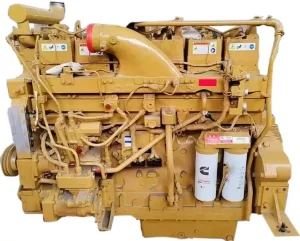
Over at TRODAT in Shandong, we see things a bit differently. We’re not in the business of bolting together a pump from one catalog and an engine from another. For us, it starts with your end goal. What are you digging? How far are you pumping it? How much do you need to move each day? We take those answers and work backwards.
Our team spends their time modelling that interaction between the pump and the engine. We look at the system curve—the total demand of your pipeline—and find the pump that fits it just right. Then, we figure out the power setup, gearbox and all, to make sure the engine’s most efficient sweet spot lines up exactly where the pump needs it to be, hour after hour. It’s a more involved way to build a dredger, but it pays off for the owner every single working day because it’s built to control your biggest costs: fuel and downtime.
This whole-system thinking carries right into the operator’s cab. The controls give the operator a clear picture of what’s happening, so they can make small adjustments to keep everything running in that efficient zone. It’s about giving the guy running the machine the tools to protect your profit.
A Quick Word on Who We Are
You might be wondering about TRODAT. We’re based out of Shandong, China, a region with its fair share of heavy industry and marine work. Our focus is building the tough equipment for those jobs—dredgers, mining pumps, and the like. The team here has been around the block; many of our engineers and welders have spent decades in shipyards and on project sites. That experience gets baked into the machines. We know a dredger isn’t a laboratory piece; it’s a workhorse that gets punished by abrasive slurry, saltwater, and tight deadlines. So we build them with a focus on what we call “site-proof” design: overbuilt where it counts, accessible for maintenance, and simple to operate. Our goal is straightforward: to deliver a machine that works when you need it to and keeps working, with our support, for the long haul.
Wrapping It Up
At the end of the day, your dredging operation lives or dies by its daily operating costs, not the initial price tag. Picking a cutter dredger based on a list of disconnected specs is a risk. The safer bet is partnering with a builder who treats the pump and engine not as separate boxes to check, but as the core partnership that defines the machine’s value. Getting that foundation right is what turns a capital purchase into a reliable, profit-earning asset.
FAQs
Q1: We’re constantly fighting high fuel bills, but our production numbers aren’t terrible. Is this a sign of a mismatch?
It sure can be. If your engine is too big for the pump’s usual workload, it’ll run lazy and thirsty. You’re paying for fuel that isn’t being turned into production. It’s a common hidden cost. Getting a review of your system’s duty cycle can spot this.
Q2: What’s the best way to check if my current pump is working efficiently?
You’ll need to get some real-time data. Track your exact fuel burn rate over a solid 4-8 hour period of steady digging. At the same time, get a good handle on your actual slurry flow rate and the total head you’re pumping against. Compare that data point to your pump’s original performance curve. If you’re way off the curve’s sweet spot, you’ve likely found your problem—either the system wasn’t matched right from the start, or your pump is worn out.
Q3: What should I tell a dredge builder to make sure the new machine is properly integrated?
Give them the real-world picture. Don’t just say “sand.” Tell them the grain size if you know it. Be specific about your pumping distances—the average, the max, and any big vertical lifts. And have a clear target for cubic meters per hour. The more color you can provide on the site conditions, the better they can model the system and build a machine that fits, instead of forcing you to fit the machine.
Q4: Does this integrated approach actually save money, or is it just a sales pitch?
It saves real money, period. Think about it: fuel and unexpected downtime are your two biggest budget killers. A dredger designed as a single, tuned system attacks both. It runs leaner on fuel for the same output, putting cash back in your budget. And because everything is working in harmony, there’s less stress and wear on components, meaning fewer breakdowns and more hours earning money. The savings over a single season can far outweigh any minor upfront difference.

Post Comment