



In modern dredging and marine construction projects, efficient transportation of the dredged slurry is crucial for the project’s continuity and cost effectiveness. Various types of pipeline transport are used in dredging. The most common types of pipe lines are discharge rubber hoses, floating dredge hoses and HDPE dredge pipes. All three products are used for the transport of sand, mud, gravel and other types of sediment. However, big differences exist with regard to the design, operating environment, flexibility and durability of these products.
As work in global ports, coastal reclamation, offshore mining and inland waterways is increasing in 2026, selecting the correct pipeline for the work to be done is of great concern to contractors and to the companies operating in the dredging field. The wrong choice can lead to excessive wear and tear, reduced flow and high maintenance costs, all resulting in loss of time.
In this article we shall explain the differences of discharge rubber hoses, floating dredging hoses and HDPE dredge pipes. We shall describe the composition, the area of application, the durability and the price of the hoses and pipes. We also shall explain how TRODAT (Shandong) Marine Engineering Co., Ltd. supplies marine engineering equipment and provides customized dredging pipeline solutions for dredging applications worldwide.
What Are the Main Characteristics of Each Type of Dredging Pipeline?
Before we can start comparing the performance of different types of dredging pipelines it is useful to first make clear the basic composition and the structure of the different types of dredging pipelines.
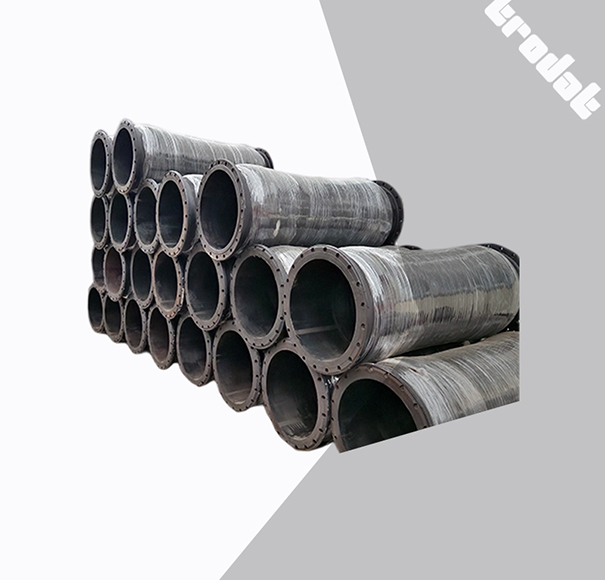
Features of Discharge Rubber Hose
Discharge rubber hoses are vital components in dredging systems, designed to transport abrasive materials such as sand, gravel, and slurry. They are typically constructed from synthetic rubber reinforced with fabric or steel wire layers to enhance structural integrity and pressure resistance. The multi-layered design ensures flexibility for both onshore and offshore slurry discharge operations. We are Chinese professional supplier of dredging equipment of Chinese famous brands or international brands as required. We design and provide dredging parts to fit new dredgers which are built in your local shipyard, to match dredgers we design and provide, and also applied for repair and maintenance of old dredgers. This hose type offers superior abrasion resistance due to its thick inner lining that withstands the continuous friction caused by solid particles within the slurry. The discharge rubber hose’s adaptability makes it suitable for various configurations, including suction and discharging hoses with steel flanges or armored designs for heavy-duty applications.
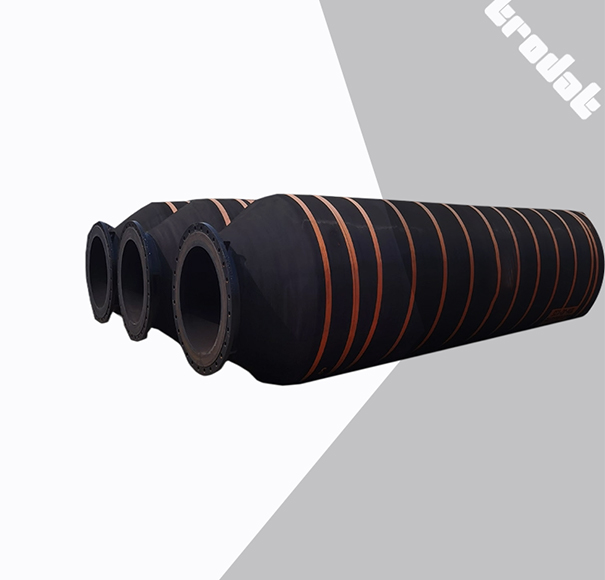
Features of Floating Dredging Hose
FLOATING DREDGING HOSES – DREDGING SELF-FLOATING HOSES are equipped with integrated buoyancy layers. By this design feature the Floating Dredging Hoses are floating on water surface. The floating dredging hoses are suitable for the toughest conditions in sea dredging and in mining. We equip the Floating Dredging Hoses with a PE-foam body, which is adjusted to the bouyance of the dredged material. FLOATING DREDGING HOSES are used as flexible pipeline connections between dredgers and floating pipelines. Because of their flexibility the hoses are able to guarantee an adequate material transfer also in turbulent sea and brackish water areas. The Floating Dredging Hoses consist of an inner rubber layer for abrasion resistance, a reinforcement layer for pressure resistance and an outer layer containing buoyant foam or PE material to guarantee the floatability. The special design of the hose outer layer provides for an excellent wave resistance and for easy handling on offshore areas.
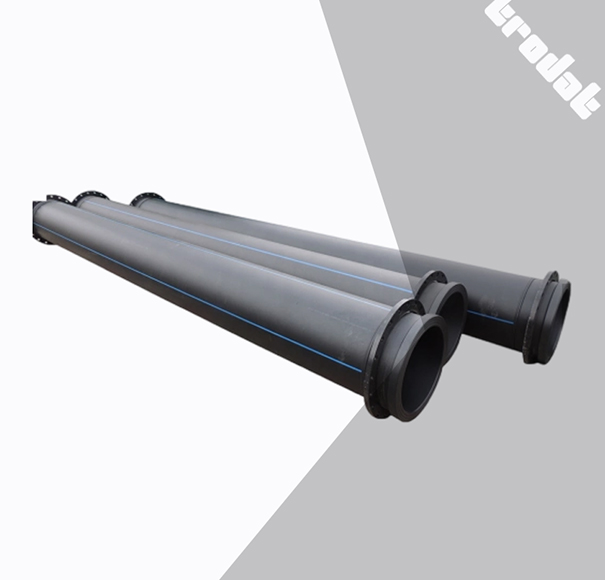
Features of HDPE Dredge Pipe
We produce modern dredge pipes made of High-Density Polyethylene (HDPE). Dredge pipes are mainly used as pipeline of dredging and water mining projects, as well as in urban water supply and drainage systems of municipal industry. Also they are the main components of floating units of marine ranch projects. Dredge pipes have smooth inside surface which enables minimum possible friction loss when transporting slurry. Pipes are very impact resistant and abrasion resistant. Due to high strength to weight ratio, HDPE dredge pipes are light in weight but very strong. They are ideal for long distance transportation of sand and other sediments in cost effective manner and ease of installation. HDPE dredge pipes are also environmental friendly, thus are ideal for sustainable marine engineering projects.
How Do These Materials Differ in Performance and Durability?
Each of the different types of dredging hoses or pipes has its own set of advantages depending on the environmental conditions and the requirements of the specific project.
Flexibility and Handling Efficiency
Rubber hoses are able to move with a dredging operation that is frequently being repositioned. Rubber hoses are able to float and remain stable within a floating environment even when subject to wave action. They are able to consistently pump slurry and minimize the risk of kinking or submersion. In contrast to rubber hoses, HDPE pipes are more rigid and are typically used for fixed-line applications. They can be easily connected together using welded or flanged joints.
Abrasion Resistance and Longevity
Discharge rubber hoses offer the best level of abrasion resistance due to the thick inner rubber lining. This is particularly important where materials such as sand and gravel are being constantly poured down the hose. Floating rubber hoses have a reasonable level of wear resistance and are designed to float. They have a protective outer coating which also helps maintain buoyancy. HDPE pipes are also very good at resisting corrosion from chemicals, but they may need to be coated with UV protection if left outdoors in the sun for extended periods.
Pressure Rating and Flow Capacity
Rubber hoses can be provided to operate at high working pressure for very heavy duty pumping services such as reclamation projects whilst Floating hose sections are generally rated to medium pressure in order to service the many flexible connections between vessels found on Oil Terminals and similar sites. HDPE pipes are designed for steady flow rates over long runs and they achieve this by having smooth inner surfaces to minimize turbulence and prevent excessive frictional loss.
In Which Applications Are These Products Commonly Used?
Different marine engineering projects have different pipeline configurations to match the project’s location, depth and the material being transported.
Coastal Reclamation and Port Construction Projects
Discharge rubber hoses are frequently used in coastal reclamation projects where sand is pumped from one location to another to create new land or to protect a shoreline. Rubber hoses are flexible and enable easy usage along the irregular coastline or in cramped work areas.
Offshore Dredging and Floating Pipeline Systems
The Floating dredging hoses are used as a connection between the trailing suction hopper dredgers (TSHDs) and the floating discharge lines that are operational offshore. Dredge Self-floating rubber hose is a type of floating rubber hose. The buoyancy layer of this hose is reducing from one side to the other side and this hose is more flexible than other types of floating rubber hoses. The design of these hoses provides them stability at different sea conditions and also facilitates for easy retrieval for any maintenance requirements.
Long-Distance Slurry Transport in Inland Waterways
HDPE dredge pipes are used in long-distance sediment transport in inland waterway construction. The pipes are light-weight which facilitates the installation of them. The total maintenance costs during the operational lifetime are kept to a minimum.
What Are the Cost Considerations When Choosing Between Them?
In selecting options, it is not only the technical solutions which are assessed but also their economic efficiency throughout the life of the project.
Initial Investment vs Operational Costs
Rubber hoses are generally more expensive in initial investment than the hose itself. They are a highly complex item made of many layers. However the heavy-duty items have a long service life. Floating hoses have to be inspected regularly, as the bouyancy material can degrade in a short period of time, especially in saltwater, but also by wear and tear. HDPE pipes have an initial lower installation cost and minimal maintenance is required over extended period of service.
Transportation, Installation, and Maintenance Factors
The flexible rubber hoses are delivered in an uncomplicated manner as they are flexible. However, they must be treated with care during installation to prevent local deformation at the coupling. For floating hoses additional equipment for flotation management is required during installation on the sea. HDPE-pipes can be connected by butt welding as well as by flange connections. Thus, the number of connection points is kept to a minimum. Assembly as well as repair work is carried out in an especially efficient manner and is completed quickly. In addition, there is less down time compared to alternative pipes that are used for similar applications.
How Does TRODAT (Shandong) Marine Engineering Co., Ltd. Support Reliable Dredging Operations?
TRODAT (Shandong) Marine Engineering Co., Ltd., a professional supplier specializing in marine engineering equipment manufacturing, provides comprehensive solutions tailored for global dredging projects encompassing all three pipeline types—discharge rubber hose, floating dredging hose, and HDPE dredge pipe.
Commitment to Quality Manufacturing Standards
In line with international certification systems our company implements very rigid quality control measures that guarantee the highest quality dredging parts. The parts are designed and produced in order to be able to fit in brand new dredgers that are being built in the local shipyard of your country. These newly designed and produced dredging parts can also be used as replacement parts in order to be able to repair and maintain older dredgers of any age. High end production techniques ensure accurate dimensions as well as constant pressure tolerance and excellent bonding between the individual hose layers.
Customized Solutions for Marine Engineering Needs
TRODAT also offers customized units that are designed to meet the specific operational requirements of a client. Their technical consultation services include design and optimization of a unit to meet a client’s needs, on-site installation by experienced engineers, training of local personnel to service unit, and after-sales service including scheduling of regular inspections and planned replacement of wear parts.
Key Takeaways on Selecting the Right Dredging Pipeline
The choice between discharge rubber hose, floating dredging hose and HDPE dredge pipe is determined by several factors including the working environment, the working pressure, the size of the project and the size of the budget.
Practical Selection Guidelines
In Nearshore Flexible Discharge Operations where tremendous maneuverability around fixed objects or into very confined discharge areas are critical; Discharge Rubber Hose is once again the best choice. The flexible rubber hose is able to operate under the highest degree of bending while the robust reinforcement layers withstand the excessive stresses associated with such flexing, without suffering from fatigue failure.
Offshore floating systems which are subject to continuous wave interaction can utilize the floating dredging hose to keep vessels aligned. Surface position is maintained by the integrated buoyancy element in the hose, and is not affected by tides.
Long lasting HDPE pipe for long distance fixed installation, providing cost effectiveness with corrosion immunity. Suitable for a freshwater channel or for handling chemical slurry in an industrial land reclamation project.
FAQs About Dredging Hoses and Pipes
1. What determines the lifespan of a discharge rubber hose?
The service life is determined by a combination of the slurry abrasiveness intensity and the operating pressure and temperature cycles over the days. Also the aging of the elastomers and the adhesion are influenced. In addition to that also the periodic maintenance of adhesion by the operators.
2. Can floating dredging hoses be used in freshwater environments?
Yes they perform well in fresh water lakes and saline oceanic waters provided that from time to time external buoyant coatings are protected from UV-induced photodegradation by suitable UV protection measures.
3. How does HDPE compare with steel pipelines in corrosion resistance?
HDPE exhibits superior corrosion immunity. It does not rust and does not interact with any substance adversely when continuously exposed to seawater electrolytes or to any other acidic slurry composition found in most of the industrial excavations.
4. Are these products customizable according to project needs?
TRODAT can supply the hose in lengths to match a particular project plus diameters to suit, and with flange patterns to match up to other components plus reinforcement to ensure the hose can cope with the hydraulic demands of the application as specified by the client from around the world.
5. What maintenance practices extend the life of these pipelines?
Inspections at routine intervals to detect localized wear on routes through storage, kept shaded from direct sunlight, which are then promptly replaced as damage indicators are detected, extend the useful life of all categories of pipe significantly in modern marine engineering.

Post Comment