



A dredging pump seal system upgrade is rarely about chasing “zero leakage” on day one. Offshore, the real win is stability: you want a seal arrangement that survives abrasive slurry, long continuous runtime, salt exposure, and the kind of start-stop cycles that happen when tides, traffic, and weather decide your schedule. If your crew is constantly tightening packing, topping up flush water, wiping down leaked slurry, or planning maintenance around seal failures, the system is already telling you something—either the sealing method isn’t matched to the duty, or the seal support system isn’t doing its job.
This guide is written for project managers, dredge masters, mechanical engineers, and maintenance supervisors who are dealing with recurring leakage on cutter suction dredgers and other slurry pumping systems offshore. We’ll break down what causes seal leakage in dredging service, how to diagnose it using signals you already have onboard, and how to plan upgrades that reduce downtime and mess without turning your vessel into a lab experiment.
Why offshore dredging makes seal leakage worse
Abrasive solids plus long runtime: the seal is fighting a war of attrition
Dredging slurry is unforgiving. Even when the pump is built for abrasion, seals see conditions that are fundamentally hostile: high solids, intermittent entrained air, pressure fluctuations, and fine particles that behave like grinding paste when they reach the wrong place. Offshore campaigns are long and steady, and that “steady” part matters. A seal that might tolerate short duty cycles nearshore can degrade quickly when it runs day after day with only brief interruptions.
A common pattern offshore is gradual drift: leakage starts minor, the crew compensates, and the project continues. Then one day the leak rate jumps, the pump room gets messy, and you lose hours. That jump is often the end of a long buildup—wear, heat, and contamination finally reaching a tipping point.
Salt air and washdown: corrosion and contamination take the easy route
Offshore vessels live with salt everywhere. Even with good housekeeping, salt mist and washdown water find their way into places you would rather keep clean. Seal chambers, flushing lines, cooling circuits, and instrument connections all become vulnerable if they aren’t designed with marine reality in mind. A seal system that depends on “clean” water can quietly become a seal system fed by water that is clean on paper but inconsistent in practice.
Limited repair windows offshore: the cost of “temporary” fixes is compounding downtime
Offshore repairs are slower, heavier, and more expensive. When the seal starts leaking, crews often take the least disruptive option first: adjust packing, increase seal water, accept a higher leak rate, and keep running. That’s understandable. But if you repeat that cycle for weeks, you may end up with secondary damage—shaft sleeve wear, grooving, increased runout, overheated components, or contamination that shortens bearing life. The longer you postpone a root-cause fix, the more likely your “seal problem” becomes a pump reliability problem.
Quick diagnosis: what kind of leak do you actually have?
Packing gland leakage vs mechanical seal leakage: the first five minutes matter
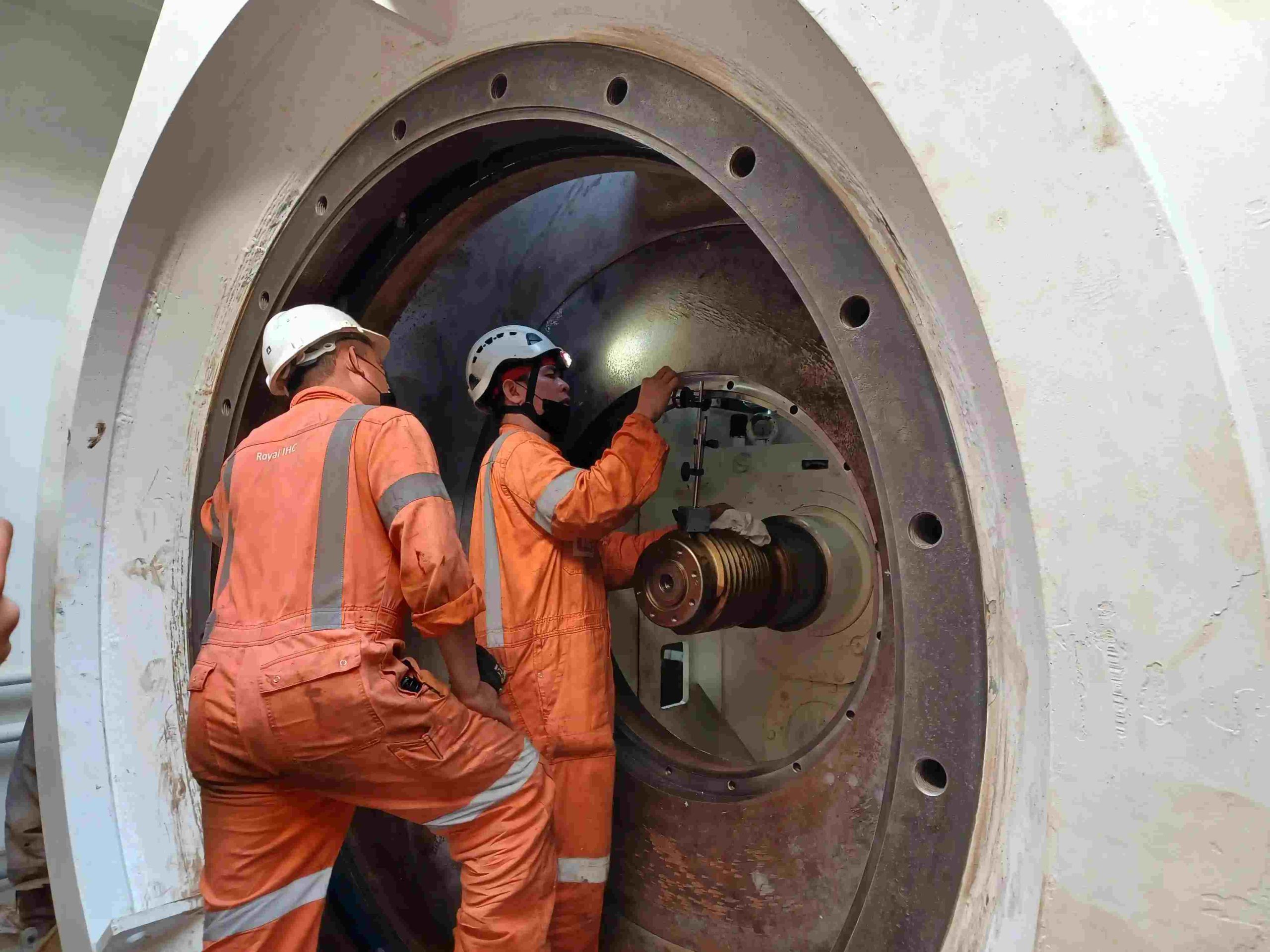
Before you talk about upgrading, you need clarity on what is leaking and where. Packing glands typically leak in a way that changes with adjustment and temperature. A mechanical seal often leaks in a way that changes with pressure conditions, face damage, or loss of flush/support. If you treat a mechanical seal leak like a packing leak, you’ll waste time. If you treat a packing issue like a mechanical seal failure, you may overreact and overspend.
Offshore, the most useful diagnostic tool is not a complex instrument. It’s pattern recognition. When does the leak begin? Does it worsen during start-up? Does it settle down after temperature stabilizes? Does it correlate with density changes, suction instability, or pressure oscillations? Those questions point you toward the real mechanism.
If leakage increases right after start-up: think alignment, venting, and dry-running moments
Start-up is when seals are most exposed. If the seal chamber isn’t properly flooded, if the pump takes air, or if the flush/support flow doesn’t establish quickly, seals can see brief dry-running conditions. Offshore crews often describe it as “it sounded rough for a moment.” That moment matters. Seal faces do not like heat spikes, and once a face is damaged, it may never recover.
Misalignment and coupling issues also show up at start-up. A pump that “settles” under load can shift the shaft centerline enough to change seal behavior. If leakage is worst during the first minutes, don’t assume it’s just “cold conditions.” Consider what mechanical changes happen between idle and loaded operation.
If leakage gets worse over days: think solids ingress, flush quality, and wear that reduces margin
A leak that grows slowly often points to contamination and wear. Solids intrusion into the seal chamber, inconsistent seal water quality, reduced differential pressure in a flush line, or wear on the shaft sleeve can all cause a leak that seems manageable—until it isn’t. Offshore, this is where crews get stuck in a loop: more flush water, more leakage management, more cleanup, then a forced stop when parts are too far gone.
Ten root causes of offshore dredging pump seal leakage
Solids reaching the seal chamber because the system can’t keep them out
In dredging service, the seal system’s first job is to keep abrasive solids away from sealing surfaces. When solids reach packing or seal faces, you see accelerated wear, heat generation, and a leak that becomes difficult to control. If the seal chamber design, throat bushing condition, or flush arrangement allows slurry to migrate toward the seal, leakage becomes a matter of time, not luck.
Flush water pressure is not truly stable under real operating conditions
Many crews “set” seal water pressure and move on. Offshore, that pressure may not be stable when the pump loads up, when density changes, or when the vessel’s auxiliary systems cycle. If flush pressure dips below what the sealing point needs, slurry can intrude. If it spikes excessively, it can overcool or destabilize the seal environment, waste water, and create side effects you didn’t plan for.
The key word here is differential. The system needs a dependable margin in the right direction, even during transients, not just a nominal setpoint on a calm day.
The flush arrangement is conceptually wrong for slurry service
This is where many retrofit discussions finally get honest. People replace seals and still leak because the seal support concept is mismatched. The issue isn’t always the seal itself; it can be the plumbing logic around it—where flush enters, how it exits, whether it truly sweeps contaminants away, and whether the system responds well when conditions change.
Offshore upgrades that last are usually the ones that treat the seal as part of a system: supply, filtration, pressure control, line routing, and failure response all matter.
Installation quality: a small misstep becomes a big leak under abrasive duty
Mechanical seals and packing arrangements both punish sloppy installation. Face handling, setting dimensions, sleeve condition, and cleanliness are not optional steps offshore; they’re the difference between a stable month and an emergency stop in the middle of a production run.
Even packing, which is often seen as “forgiving,” can become destructive when over-tightened. Over-compression increases heat, damages sleeves, and leads to a leak pattern that the crew can’t control without eventually replacing hardware.
Pressure instability and cavitation eat away at reliability
Slurry pumps often operate near boundaries—NPSH margin, suction stability, density variability, and pipeline transients. When the pump experiences cavitation, air ingestion, or rapid pressure oscillations, the seal environment becomes chaotic. Mechanical seal faces can chatter or open momentarily; packing can lose its stable film; temperatures swing. Offshore, these effects can be subtle until you look at the broader system behavior.
If you’re seeing recurring seal issues, it’s worth checking whether the pump is being forced into unstable operating regimes by suction conditions, pipeline restrictions, or control habits.
Shaft sleeve wear and runout: the leak you cannot “adjust away”
Packing is often adjusted tighter when it leaks, but if the sleeve is worn or grooved, tightening just accelerates damage. The same goes for seals that rely on a healthy shaft and stable runout. Offshore, runout can increase due to bearing condition, alignment drift, or structural movement. If runout grows, seals and packing become harder to stabilize.
A practical retrofit plan includes checking sleeve condition and shaft behavior, not just replacing the sealing element.
Thermal issues inside the seal chamber: heat is a silent multiplier
Seal leakage and heat feed each other. Poor flushing or contamination increases friction; friction increases temperature; temperature changes the material behavior; leakage becomes worse. Offshore crews often notice it as a “hot” smell, abnormal warmth near the gland, or a visible change in leakage character. The root cause may be as simple as poor heat removal or as complex as unstable operating conditions, but ignoring heat rarely ends well.
Packing selection and compression: “tighten more” is not a strategy
Packing is designed to leak a controlled amount in many applications because that leakage helps cool and lubricate the packing. Offshore, teams often push packing too far in pursuit of a dry gland, especially when leakage makes the deck unsafe or the pump room messy. The result is heat, sleeve wear, and eventually a bigger problem.
If packing is the chosen approach, the safe goal is controlled behavior, not perfection. If that goal is impossible under your duty cycle, you may be looking at the wrong sealing concept for offshore dredging.
Shutdown habits: solids settle, then destroy seals during the next start
When slurry service stops, solids do not politely remain suspended. If shutdown procedures do not account for settlement and flushing, the next start can drag solids across sealing surfaces or restrict flush pathways. Offshore, shutdowns can be frequent due to external constraints. That means your procedures must be designed for real operations, not ideal operations.
Secondary effects: leakage is also a safety, corrosion, and housekeeping problem
Offshore leakage isn’t just a maintenance cost. It creates slip hazards, accelerates corrosion, and increases the workload on crews who should be focused on production and safety. If you’re treating leakage as “annoying but acceptable,” you may be underestimating its broader operational cost.
Retrofit options: from practical fixes to full seal system upgrades
Level 1: Operational corrections that cost little but change outcomes
Some seal failures are driven by habits rather than hardware. Start-up sequencing, early establishment of flush/support flow, avoiding aggressive density ramping before the system stabilizes, and consistent shutdown flushing can significantly improve seal life. These changes don’t require new parts, but they do require discipline and a procedure that crews can follow under pressure.
Level 2: Hardware corrections that remove chronic failure triggers
If the system has worn sleeves, damaged gland components, poor throat bushings, or poorly routed flush lines, no amount of good operation will save it. Offshore upgrades often start with restoring the “geometry” of sealing: smooth sleeves, correct clearances, stable flushing entry points, and components that match the slurry duty.
A practical approach is to identify which components are repeatedly sacrificed. If sleeves are being destroyed every campaign, the system is signaling misalignment, over-tightening, or contamination that isn’t being managed properly.
Level 3: Seal concept upgrades that change the reliability ceiling
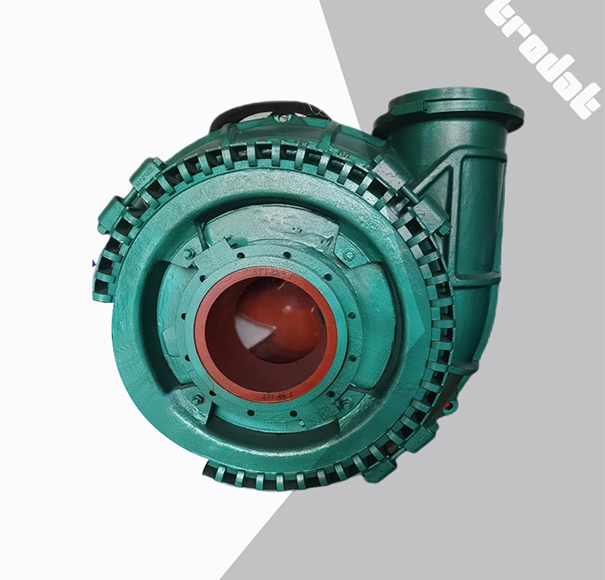
At some point, packing becomes a constant compromise offshore, especially when downtime and housekeeping costs are high. Mechanical seals can be the right step, but only when the support system is built for slurry service. Single arrangements may work in controlled conditions, but offshore dredging often benefits from concepts that are more tolerant of contamination and transients, provided the vessel can support the necessary flush/pressure control and maintenance approach. If your retrofit plan includes evaluating the pump platform itself—flow, head, material choices, and service configuration—review TRODAT’s dredging pump product range to match the pump and sealing approach to your offshore duty cycle.
The key here is to treat the upgrade as a reliability project, not a parts swap. You want an approach that keeps abrasive solids away from the sealing surfaces and keeps the seal environment stable even when conditions shift.
Offshore reality check: spares strategy and maintainability are part of the design
A seal system that is theoretically excellent but practically unserviceable offshore can become a liability. When you evaluate upgrades, consider how quickly the crew can inspect, adjust, and replace components at sea; what spare parts are realistic to carry; and what tools and skills are available onboard. Offshore reliability is as much about maintainability as it is about component selection.
Flush water and seal support: the part most “seal upgrade” articles skip
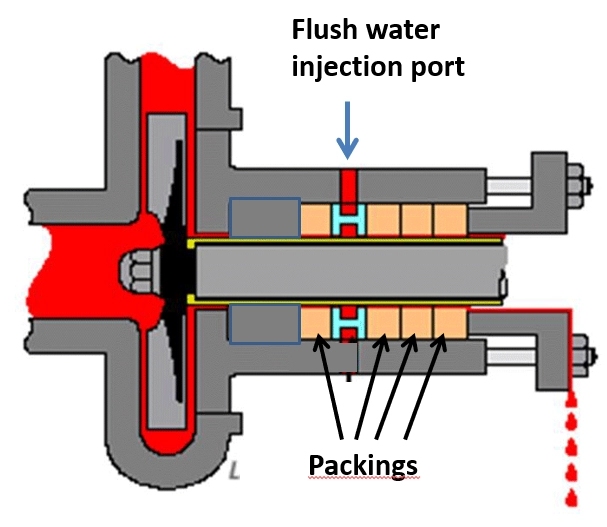
What a flush plan is, in plain language
A flush arrangement is the seal’s support system: it supplies clean fluid where needed, removes heat, and creates a barrier against slurry intrusion. In slurry service, the flush is not optional decoration. It is often the single biggest lever you can pull to improve seal life.
What makes offshore tricky is variability. Your flush supply might share resources with other systems, your water quality may change, and your pressure environment can shift with operating point. A support system has to tolerate those realities without becoming fragile.
Clean source, filtration discipline, and stable pressure: consistency beats heroics
If your flush water has fine solids, if filtration is inconsistent, or if pressure control is erratic, you’re feeding the seal a problem while expecting it to solve another problem. Offshore upgrades that last usually standardize the basics: a reliable clean source, filtration that matches reality, and pressure control that does not wander when other systems load up.
This is also where crews gain confidence. When the seal support behaves predictably, operators are less tempted to improvise adjustments that create new issues.
Instrumentation that pays off offshore: you don’t need a “smart ship,” you need early warning
You don’t need a complex monitoring suite to improve seal outcomes. But you do benefit from visibility into the few variables that tell you whether the seal environment is stable: whether flush is present, whether pressure margin is maintained, whether temperature is drifting, and whether the system is behaving consistently shift to shift. Offshore, early warning is often the difference between a controlled stop and a forced stop.
Field SOP: how crews keep seals from leaking during long campaigns
Daily checks that focus on trends, not just “is it leaking”
The most useful offshore checks are trend-based. Is the leak rate changing over days? Is the gland area running hotter than it did last week? Are crews compensating more often? Those are signals of drift. When you act on drift early, your options are wider and cheaper.
Start and stop habits that protect seals in slurry service
A stable seal system offshore often depends on boring routines: establish flushing early, ramp up density only after flow and pressure stabilize, and flush properly during shutdown so settlement does not sabotage the next start. These habits sound simple, but they have outsized impact because they address the moments when seals are most vulnerable.
Emergency response when leakage spikes: stop, stabilize, or limp?
When leakage jumps suddenly, the crew needs a decision approach that doesn’t rely on panic or optimism. Offshore, you can’t always stop immediately, but you also can’t ignore a leak that is rapidly worsening. The best response depends on the nature of the leak and the stability of the system. A controlled stabilization step—reducing aggressive operation, restoring seal support stability, and planning a safe stop—often prevents secondary damage that turns a seal issue into a multi-day repair.
What to record so the next failure is diagnosable
One reason seal problems repeat is that the ship forgets what happened. Offshore crews rotate; conditions change; memories fade. Recording key observations about operating conditions, seal support behavior, and leak progression turns future troubleshooting into diagnosis rather than guesswork.
Decision guide: do you need a seal system upgrade, and which path makes sense?
Signs you’ve outgrown packing offshore
Packing can be a valid solution when leakage management is acceptable, when sleeve wear is manageable, and when the operating regime is stable. Offshore, you may outgrow packing when the crew spends too much time adjusting it, when sleeves are frequently damaged, when housekeeping and safety risks climb, or when downtime costs become painful.
At that point, the question is not “packing vs mechanical seal” in the abstract. The question is: what sealing concept, supported by what flush system, will produce stable operation under your actual slurry duty?
When mechanical seals fail repeatedly, the support system is often the real culprit
If mechanical seals are failing early, it’s tempting to blame the seal. Sometimes that’s fair. But offshore dredging frequently reveals a different truth: the support environment is unstable. Solids intrusion, inconsistent flush, pressure transients, and installation practices often dominate outcomes. Upgrading the seal without upgrading the support concept is a common way to buy the same failure twice.
A practical ROI story that managers accept offshore
Managers don’t need a theoretical lecture. They need to understand how leakage translates into lost hours, additional spares, cleanup time, safety exposure, and disrupted production. Offshore, even a modest reduction in unplanned stops can justify a thoughtful upgrade because each stop has cascading consequences: lost window, disrupted pipeline stability, crew fatigue, and increased risk.
The “minimum viable upgrade” that usually delivers the biggest reliability jump
If you want the highest return with the lowest risk, start by making the seal environment stable: correct clearances, healthy sleeves, a dependable clean flush supply, and procedures that protect seals during start and stop. Once those fundamentals are reliable, seal concept upgrades become far more likely to succeed.
TRODAT (SHANDONG) MARINE ENGINEERING CO., LTD
TRODAT (SHANDONG) MARINE ENGINEERING CO., LTD supplies dredging equipment and supporting marine engineering systems for both newbuild and repair/maintenance scenarios, covering power drive components and working devices such as dredging pumps, diesel engines, marine gearboxes, transfer cases, and hydraulic pump stations, along with dredging devices and deck machinery used in real projects. The company’s manufacturing follows an ISO9001:2015 quality management system, and marine-use certification support can be provided where required.
Conclusion
Offshore seal leakage is rarely “just a seal problem.” It’s a system behavior problem that shows up at the gland because that’s the weakest link in a harsh chain. If you want fewer leaks offshore, focus on what actually drives outcomes: keeping abrasive solids away from sealing surfaces, maintaining a stable support environment, controlling the moments that create damage during start and stop, and correcting mechanical conditions like sleeve wear and runout that no adjustment can fix. When upgrades are planned as a reliability package—seal concept, support system, and field SOP—they stop feeling like repeated firefighting and start delivering the one thing offshore projects need most: predictable weeks of steady operation.
FAQs
Why is my dredging pump packing gland leaking more after I tighten it?
Because over-tightening increases friction and heat, which can damage the shaft sleeve and packing, making leakage harder to control. In slurry service, packing often needs controlled leakage for cooling. If you can’t stabilize leakage without constant tightening, the sealing concept or support conditions may be mismatched to offshore duty.
Why is my dredging pump mechanical seal leaking offshore even after replacement?
Offshore leakage after replacement often points to solids intrusion, unstable flush/support pressure, installation issues, or pressure transients from cavitation or suction instability. Replacing the seal without stabilizing the seal environment can lead to repeat failures.
How do I set flush water pressure for a slurry pump seal on a dredger?
Flush pressure should maintain a reliable positive margin at the sealing point under actual operating conditions, not just at idle. The correct margin depends on the seal arrangement and pump conditions, so it should be set based on the pump and seal design and verified during high-load operation, not guessed from a single static reading.
What is a seal flush plan and why does it matter for dredging pumps?
A seal flush plan is the way clean fluid is delivered to support the seal: it manages heat, creates a barrier against slurry, and helps keep contaminants out of the seal chamber. In dredging service, the flush arrangement often determines whether a seal lasts weeks or fails early.
What should I do if seal leakage suddenly increases during offshore pumping?
Treat a sudden jump as a stability event. Reduce aggressive operation, confirm the seal support system is functioning as intended, and plan a controlled stop if leakage continues to rise. Continuing at full duty can cause secondary damage—sleeves, bearings, and adjacent components—that turns a seal issue into a longer outage.

Post Comment