



On a dredger, the deck crane is the piece of equipment that can turn a normal day into a serious incident in seconds. People tend to treat lifting as “routine” until the load starts to swing, the radius creeps out, or the wind comes up right as the hook clears the deck. Offshore and nearshore dredging projects add one more twist: the deck is rarely a quiet, fixed platform. Even small vessel motion changes the way a lift behaves.
This article is for project managers, dredge masters, deck supervisors, HSE leads, crane operators, and riggers who need a dredger deck crane safety procedure that works in real dredging conditions. We’ll walk through why shipboard lifting is different, how to build a lift plan crews actually follow, how to read the signals that a lift is turning “critical,” and how to prevent the most common causes of dropped objects and near-misses. The goal is practical: fewer surprises, cleaner lifts, and safer work.
What makes deck crane lifting on a dredger different
Vessel motion and load swing: why “normal crane rules” aren’t enough
A land-based crane operator can count on one thing: the ground is still. On a dredger, that assumption disappears. Even at anchor, you can get slow roll, pitch, or yaw that’s small enough to ignore—until you lift something long or heavy. Once a load is suspended, the vessel’s motion becomes part of the crane system. That motion can amplify swing, especially when the load is lifted from a wet deck, snags on gear, or is transferred across a short distance with limited clearance.
This is why “keep the load under control” isn’t a useful instruction by itself. The real question is: how do you prevent the first few seconds of the lift from setting up a pendulum that you can’t dampen without stopping? On dredgers, a lot of good lifting practice is about managing those first seconds: clean pick, steady hoist, minimal slewing until the load is stable, and clear communication between the operator and the banksman.
Typical dredger deck lifts: pipes, hoses, tools, spares, and maintenance lifts
Dredgers have a unique mix of lifts. You’re not only moving “cargo.” You’re moving dredging hardware: pipeline spools, floating hose sections, heavy wear parts, cutter-related tools, pump spares, and containers of consumables. Some of these are long and awkward. Some are dense and compact. Some are contaminated with mud and water, which changes their effective behavior when they clear the deck.
A safe procedure has to match these realities. A pipe section that looks balanced on deck may not hang balanced once lifted. A hose section with water trapped inside may shift while it’s in the air. A pallet of spares may be fine in calm weather but become a sail in gusty wind.
The three incidents you must design out: dropped objects, snagging, and overload
Most serious lifting incidents on dredgers fall into three buckets. The first is dropped objects, often tied to rigging failure, poor connection control, side loading, or uncontrolled swing. The second is snagging: loads catch on deck fittings, rails, or other gear, then release suddenly. The third is overload, typically caused by radius creep, misread load charts, dynamic effects from vessel motion, or sling angle mistakes that quietly increase line tension.
If your procedure and lift plan prevent those three, you’ve done 80% of the work.
Compliance essentials without turning your procedure into a PDF
What “planned, supervised, competent” means in daily operations
A lot of lifting guidance sounds good on paper and fails on deck because nobody knows who owns the decision. On a dredger, “planned and supervised” needs to be explicit. Before the lift, one person should be responsible for confirming the lift category, the rigging method, and the stop conditions. During the lift, one person should control the communication channel to the crane operator. After the lift, someone should log what matters: abnormal conditions, any near-miss, and any rigging concern.
Competence is not a certificate alone. It’s also familiarity with the vessel, the crane’s actual behavior, and dredging-specific loads. A new operator can be skilled and still underestimate how fast a long load starts to sail. A rigger can be experienced and still miss how sling angles change when the load clears the deck.
SWL and load chart basics for shipboard cranes: radius is the silent variable
Shipboard cranes live and die by radius. The safe working load might look generous at short radius and then drop sharply with outreach. On a dredger deck, it’s easy to let radius creep. The operator slews a little farther to avoid an obstacle. The hook drifts. The load swings out. Suddenly the crane is working at a lower capacity without anyone saying a word.
A good procedure forces the question early: what radius will the lift happen at, and how will you keep it from drifting? That question matters even more offshore because dynamic effects add effective load. A lift that is “within SWL” on paper can become uncomfortable if vessel motion adds shock loading or if the load snags and releases.
Inspection, testing, and records: what auditors ask for and what crews need
Most dredging contractors already keep inspection records, but the weak point is often pre-use inspection discipline and consistent rigging checks. The safest crews don’t treat inspection as paperwork. They treat it as a daily habit tied to specific failure modes.
On a dredger, the most valuable routine is the one that catches the “slow killers”: wire rope damage, hook throat opening, worn safety latches, damaged sheaves, and rigging gear that looks fine until you load it. Records matter for compliance, but on deck, the real win is catching the defect before it becomes a surprise at the worst moment.
The one-page rule: if the crew can’t remember it, they won’t use it
A procedure that reads like a manual often becomes shelf decoration. A practical safety procedure has a short “field version” that’s easy to recall. The longer document can exist, but it should support the short one. In this article, you’ll see repeated “decision triggers” and “stop points.” Those are the parts crews remember when the lift gets weird.
The shipboard lifting plan that actually works offshore
Routine lift vs critical lift: a simple classification crews can apply
On dredgers, the word “critical lift” gets thrown around until it means nothing. Your procedure should give crews a clean way to classify lifts, because the classification drives behavior.
A lift becomes critical when consequences are high or control is hard. That can mean lifting near people or critical equipment, lifting long loads that can whip, lifting near the vessel edge, lifting in higher wind, lifting at longer radius, or lifting anything close to capacity. It can also mean any lift where visibility is limited and the operator depends entirely on banksman calls.
If you classify the lift correctly, you can apply a higher standard: slower pace, tighter exclusion zone, stricter comms discipline, and a hard stop rule if conditions change.
Pre-lift talk that doesn’t waste time: what must be said out loud
A toolbox talk fails when it becomes a script. On a dredger, a pre-lift talk should be short and specific. It should confirm what is being lifted, where it’s going, what rigging is being used, who is calling the lift, where people will stand, and what the stop conditions are. Then it should end.
The single most useful phrase in a pre-lift talk is simple: “If anything feels off, we stop and we reset.” That sounds obvious, but it changes behavior. It gives the crew permission to pause without losing face.
Communication protocol: operator–banksman–rigger callouts that prevent confusion
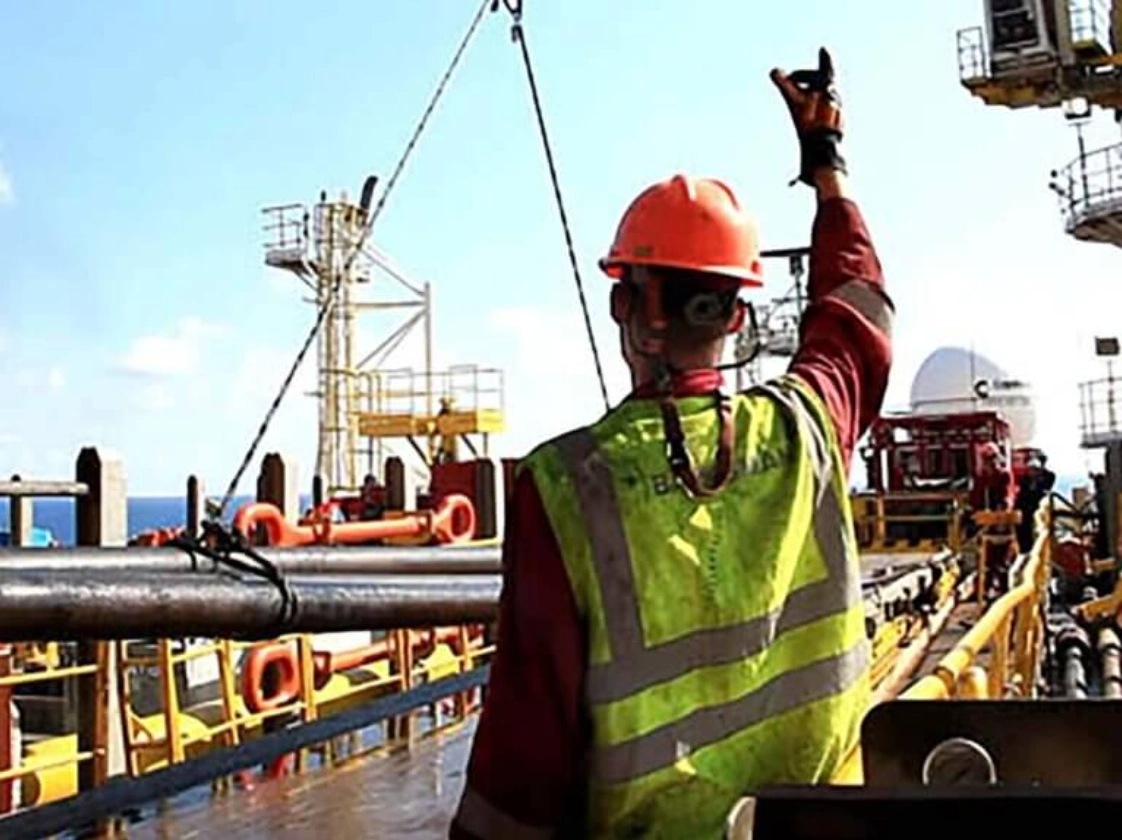
Shipboard lifting is noisy. Engines run. Pumps cycle. Radios cut out. You need a protocol that works when the environment is imperfect.
A practical approach is one channel, one caller, and short commands. The banksman calls movement. The rigger confirms load status. The operator repeats critical commands when needed. If comms are lost, the lift stops. That rule needs to be non-negotiable offshore because a few seconds of confusion can put a swinging load over people.
Exclusion zones on a working deck: how to set them without stopping the vessel
On dredgers, the deck is never empty. There are hoses, fittings, handrails, and ongoing work. Exclusion zones therefore have to be realistic. The goal is to keep people out of the drop zone and out of pinch zones where a swinging load can trap someone against fixed structure.
A solid procedure defines the drop zone based on the lift path and adds a buffer for swing. It also defines a safe position for the banksman—clear view, clear escape route, not directly under the line of fire.
Pre-use inspection that catches real failures
Crane checks before every shift: the items that actually prevent incidents
A deck crane can look fine and still be unsafe. The checks that matter most are the ones tied to control: brakes, limit switches, hoist and slewing response, emergency stop behavior, and visible hydraulic leaks that indicate a system losing integrity. A crane that “responds late” or “feels soft” is a crane that can surprise you when the load starts to move.
Pre-use checks should also include verifying the load chart is available and understood for the planned radius. If the operator cannot confirm capacity for the actual working radius, the lift is not ready.
Wire rope, hooks, and sheaves: the non-negotiable defects
Wire ropes on dredgers live in a harsh environment. Salt air, spray, grit, and irregular loading all speed up wear. Defects that matter include broken wires in clusters, flattened sections, kinks, birdcaging, corrosion pitting, and any damage that suggests the rope has been shocked or crushed.
Hooks deserve the same attention. A hook with visible deformation, damage around the saddle, or a latch that doesn’t close cleanly is not a “maybe.” It’s a stop and replace. Sheaves and drums matter too: if the rope is not tracking correctly, it can accelerate wear and create uneven loading.
Rigging inspection on board: slings, shackles, and the small mistakes that drop loads
Many dropped loads involve rigging that was “almost right.” A shackle pin that wasn’t fully seated. A sling that was twisted. A connection that side-loaded the pin. A soft sling cut by a sharp edge because nobody padded the contact point.
Your procedure should treat rigging like a system. It’s not just about rated capacity; it’s about configuration. A sling angle that looks fine can increase line tension dramatically. That’s physics, not opinion.
The early warning signs of a dropped object event
There are patterns that show up before a serious incident. Unstable loads that won’t settle. Repeated snagging during hoist. People rushing to “help” with their hands because tag lines weren’t planned. Operators having to compensate constantly because the lift wasn’t balanced.
When you see those signs, your procedure should give the crew a clear exit: lower the load, reset rigging, and re-brief. On dredgers, stopping early is faster than recovering later.
Safe lifting execution on a moving deck: a step-by-step field SOP
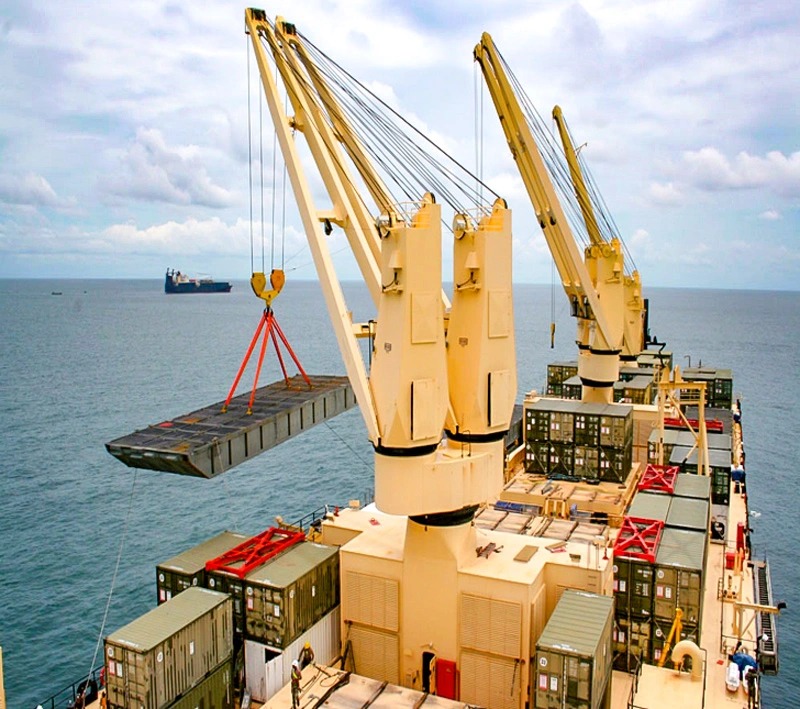
The first 30 seconds: clean pick, stabilize, then move
A lot of bad lifts start with impatience. The hook takes tension, the load breaks free, and the operator immediately slews or booms while the load is still settling. Offshore, that’s a recipe for swing.
A better pattern is boring, and that’s the point. Take weight smoothly. Lift just clear of the deck. Pause. Let the load settle. Confirm balance and rigging behavior. Then move slowly into the travel path.
Radius control and load chart use: avoiding the “creep” that causes overload
On a dredger, radius creep happens when you’re trying to clear deck obstacles. The operator booms out a little more. The load swings out. The crew “just wants to get it done.” That’s how SWL gets exceeded without any dramatic moment.
A practical procedure sets the path before the lift: where the load will travel, what clearance is needed, and how you’ll keep the radius as planned. If the path requires longer radius than expected, re-check the load chart before you lift. If you’re reviewing deck crane configuration or planning upgrades for dredger lifting operations, you can reference TRODAT’s product page for marine hydraulic cranes to align the crane setup with your lift plan and working radius.
Sling angle and side loading: how loads quietly exceed SWL
Sling angle is a classic trap because the load weight does not change, but the tension in the sling legs does. As the angle decreases, tension increases. The crew might be lifting a 2-ton item and believe they have a wide margin because slings are “rated high.” But if the sling legs are shallow, the tension can climb significantly.
A practical way to explain it onboard is this: the wider the sling legs spread out horizontally, the harder each leg has to pull to hold the same weight. That extra tension loads shackles, hooks, and sling fibers, and it can push components into a failure regime even when the “load weight” looks safe.
Side loading is the other silent killer. Shackles and hooks are designed for axial loading. When a load pulls sideways because the rigging is misaligned or the load swings, the hardware sees stresses it wasn’t meant to take.
Tag lines offshore: when they help and when they hurt
Tag lines can be lifesavers on deck, but they can also create risk when misused. A tag line should keep the load from rotating and reduce drift. It should not put a crew member in the bight or in a position where a sudden swing can yank them off balance.
On dredgers, a good tag line plan includes where the handler will stand, how they’ll release if needed, and how they’ll avoid stepping into pinch zones. If the deck is wet and rolling, the safest move may be to reduce lift speed and maintain clean control rather than relying on a person to “muscle” the load.
Set-down and de-rig: pinch points, snagging, and the final incident window
Set-down is where many injuries happen because people relax. The load is close to the deck, so hands come in. Feet shift. Someone tries to “help” alignment. On a dredger, the deck can move slightly right when the load touches down, and that movement can trap fingers or push a load into a snag point.
A disciplined procedure keeps hands out until the load is stable. Then rigging is removed with clear communication, and the hook is raised away cleanly. If a load must be guided into tight alignment, use controlled methods and keep the crew out of crush zones.
Weather and sea-state limits: when to stop lifting
Wind limits: the problem isn’t the average wind, it’s the gusts
On dredgers, wind creates two hazards: it increases swing and it increases the “sail effect” of certain loads. Long items like pipes and hose sections can behave like wings. Flat loads like pallets can suddenly drift.
Any wind limit must follow the crane manufacturer guidance, the project lift plan, and the vessel’s operating rules. But here’s the practical point: gusts matter more than averages. A lift that is stable at steady wind can become unsafe when gusts hit during slewing.
Sea state and vessel motion: why swell direction matters
Sea state affects vessel motion, and vessel motion affects lift dynamics. A lift that feels fine with swell on the bow may feel unpredictable when swell hits on the quarter. When vessel motion increases, the load’s relative movement increases, and the crane system sees more dynamic effect.
A good procedure gives the supervisor authority to stop lifts when motion crosses a comfortable threshold, even if production pressure is high. Offshore, “we can probably do it” is not a safety margin.
Night operations: visibility, fatigue, and the false sense of routine
Night lifts can be safe, but they require discipline. Poor lighting hides rigging defects and increases miscommunication. Fatigue reduces reaction time and increases the chance that someone steps into a pinch zone.
If you lift at night, your procedure should treat it as higher risk by default, with stronger comms discipline and a slower pace. Most offshore incidents don’t happen because people don’t know what to do; they happen because people do it too fast.
High-risk dredger scenarios and how to handle them
Lifting long items (pipes and hoses): rotation control and whip risk
Long loads behave badly offshore. They rotate, they whip, and they can snag easily. The key is planning the pick points so the load hangs stable and doesn’t rotate unexpectedly. If the load must be turned, it should be turned slowly with controlled slewing and planned tag line handling, not with improvised pushing.
Lifts near the vessel edge and over water: dropped object controls
When you lift over water, consequences change. A dropped load can damage subsea equipment, pipelines, or the environment, and recovery can be difficult. Over-water lifts should be treated as critical more often than not, with tight exclusion zones and strict comms.
One practical rule many experienced crews follow is simple: if the load path crosses the vessel edge, everyone not essential to the lift should be clear, and the lift pace should slow down. Offshore, there is no benefit to racing a lift over water.
Maintenance lifts near machinery: entanglement and pinch hazards
Maintenance lifts often look small, but they can be risky because they happen in tight spaces near moving machinery or hot equipment. The deck crane may be used to lift a motor, a gearbox, or a pump component. These lifts need clear isolation and lockout coordination, and they need a clean travel path.
Emergency stop and recovery: what to do when the load starts to run away
Every lift plan should include the “what if” plan. What if the load starts to swing hard? What if comms fail? What if the rigging looks wrong mid-air? The safest response is usually to stop movement, stabilize, and lower the load to a safe position if possible. Panic slewing often makes it worse.
Crews should practice this mentally. A calm emergency stop is a skill.
Maintenance and inspection rhythm that keeps a deck crane reliable
Preventive maintenance: catching drift before it becomes failure
On dredgers, maintenance is often scheduled around production. That’s understandable. But a deck crane that is allowed to drift into poor condition becomes a schedule risk. Leaks, slow response, unusual noise, brake issues, and inconsistent controls are early signs that something is changing.
A practical maintenance rhythm pairs operator feedback with periodic technical checks. When the operator says the crane “feels different,” treat it like a data point, not a complaint.
Records and certificates: keep them audit-ready, but also crew-friendly
Your documentation should support two audiences: auditors and crew. Auditors want proof of inspection and competence. Crews want quick access to what matters: load chart, basic operating limits, and a clean history of defects and repairs. When records are organized, crews trust the system more and follow the procedure more consistently.
Competency and refresher training: what experienced crews still review
Even experienced crews benefit from short refreshers, especially when new rigging gear arrives or when project conditions change. The most valuable refreshers focus on recurring failure modes: radius creep, sling angle effects, side loading, comms breakdown, and stop triggers. Training that mirrors real dredger scenarios is more likely to stick.
Quick-reference section: the parts people search mid-job
Why my ship deck crane SWL drops when radius increases
Because crane capacity depends on leverage. As the boom reaches farther, the same load creates more overturning moment, so allowable load decreases. On a dredger, this matters because swing and clearance demands often push the lift toward longer radius without anyone noticing.
How to set an exclusion zone for deck crane lifting on a dredger
Start from the lift path and assume the load can swing. A practical zone keeps people out of the drop zone and out of the likely swing arc. If the deck is crowded, don’t shrink the zone until it fits; change the lift plan until the zone is realistic.
When to stop the lift
Stop when you lose comms, when the load snags, when the load starts to swing beyond control, when radius is no longer what was planned, or when wind and vessel motion change enough that the lift no longer feels predictable. Offshore, stopping early is the most cost-effective safety tool you have.
TRODAT (SHANDONG) MARINE ENGINEERING CO., LTD: brief introduction
TRODAT (SHANDONG) MARINE ENGINEERING CO., LTD supplies dredging equipment and supporting marine engineering systems for newbuild dredgers as well as repair and maintenance needs. The company’s scope includes dredging pumps, power and drive components, hydraulic systems and pump stations, dredging working devices, deck machinery, and outfitting items used for mooring and towing. It also supports project teams with practical model selection and configuration matching so equipment fits real operating conditions, not just brochure assumptions. Production follows an ISO9001:2015 quality management framework, and IACS product certification can be provided for marine use where required.
Conclusion
A dredger deck crane safety procedure only works when it matches real dredging conditions: a moving deck, variable wind, awkward loads like pipes and hoses, and the pressure to keep the job moving. The safest crews rely on a few disciplined habits—clean lift classification, a short pre-lift talk with clear stop triggers, strict communication control, and pre-use inspection that targets real failure modes. When those basics are consistent, the crane becomes a reliable tool rather than a daily gamble. That stability protects people first, and it protects schedule right behind it.
FAQs
Why is my deck crane load chart showing lower SWL at longer radius?
Because crane capacity is governed by overturning moment. As radius increases, the same load creates higher moment, so the safe working load drops. On a dredger, radius can creep during slewing or obstacle clearance, so the lift plan should control radius rather than assuming it stays constant.
How do I set a safe exclusion zone for dredger deck crane lifting?
Build the zone around the lift path and assume swing, not perfect control. The safest exclusion zone keeps people out of the drop zone and away from pinch points where a swinging load can trap someone against fixed structure. If the deck is too congested to keep a realistic zone, the lift plan should change before the lift starts.
What should I check during pre-use inspection of a ship deck crane and rigging gear?
Focus on control and failure points: brake behavior, limit functions, abnormal response, visible leaks, wire rope condition, hook integrity, and rigging configuration that avoids side loading. Many incidents come from “almost OK” rigging, so the inspection should look at how the gear will be loaded, not only the stamped rating.
When should offshore lifting operations stop due to wind or vessel motion?
Stop when conditions change enough that the lift becomes unpredictable—especially gusty wind, increased vessel motion, or reduced visibility that limits clear communication. Always follow the crane’s operating limits and the project lift plan, but treat gusts and sudden motion changes as serious risk multipliers on a dredger.
How do I know if a lift should be treated as a critical lift on a dredger?
Treat it as critical when control is hard or consequences are high: long or awkward loads, lifts near capacity or at longer radius, lifts over water or near the vessel edge, limited visibility, or any lift where comms must be perfect. Critical lifts deserve slower pace, tighter supervision, and stricter stop triggers.

Post Comment