



Harbor dredging operations routinely face overlapping hurdles like restricted navigation periods, cramped excavation zones, hazards around dock frameworks, diverse sediment layers, and rigorous ecological limits. A practical evaluation structure here contrasts cutter suction dredgers (CSDs), grab dredgers (commonly called clamshell types), backhoe dredgers, and trailing suction hopper dredgers (TSHDs) to guide suitable machinery picks in port environments, underscoring essential prerequisites and potential pitfalls tied to each.
Answer: Cutter Suction Dredger vs Grab Dredger vs Backhoe Dredger vs TSHD: Which One for Harbor Dredging?
No dredger type emerges as the absolute best across all harbor tasks; selection boils down to the particular site demands and restrictions in play.
Large routine cleanouts dominated by soft sands or silts, calling for swift repositioning and extended spoil hauls, often lean toward TSHDs due to their built-in propulsion and substantial storage, particularly where waters allow freer movement. CSDs, however, step up for compact or adhesive grounds that require sharp contouring and reliable throughput, assuming anchor or spud arrangements fit without heavily impeding vessel flows. Backhoe setups thrive near wharves, embankments, or pier supports in squeezed layouts demanding tight handling, solid breakout force, and exact spot refinements. Grab systems align with needs for direct vertical extractions, focused trench deepening, debris elimination, or targeted removals, emphasizing adaptability and oversight rather than sheer volume rates.
Harbor Dredging’s 7 Key Decision Variables
Understanding the critical conditions influencing dredger selection forms the foundation of any effective harbor dredging strategy. These variables encompass a range of operational, geological, and regulatory factors that shape equipment suitability.
Navigation and Workspace Occupation
The ability to occupy channels or berths for extended periods represents a primary concern in harbor environments. Strict navigation windows often limit continuous operations, forcing dredgers to accommodate vessel traffic without prolonged interruptions. Similarly, the feasibility of deploying anchors or positioning spuds long-term must align with port authority regulations to avoid conflicts with commercial shipping routes. In bustling ports like those handling container traffic, even brief occupations can escalate costs through delays, underscoring the need for equipment that minimizes footprint and maximizes quick repositioning.
Projects in high-traffic zones, such as major import-export hubs, illustrate this variable’s impact; dredgers requiring extensive mooring setups may face downtime exceeding 30 percent of total project duration if navigation demands frequent halts. Evaluating historical traffic data and coordinating with harbor masters early ensures that selected equipment integrates seamlessly into the operational rhythm, preventing bottlenecks that could extend timelines by weeks.
Workspace Constraints and Proximity to Structures
Proximity to critical infrastructure, including docks, revetments, bridge piers, caissons, or submerged pipelines, heightens risks of structural damage during dredging. Narrow or irregular workspaces, such as those in corner areas, along edges, or over shallow banks, may restrict large vessel maneuvers, limiting rotation radii and access. For instance, in older ports with legacy wharf designs, dredgers must navigate spaces under 50 meters wide, where oversized hulls risk collisions or inefficient coverage.
This variable demands assessments of site geometry through bathymetric surveys, identifying zones where precision overrides speed. Equipment that offers fine-tuned positioning reduces liabilities, as seen in cases where inadvertent contact with underwater cables has led to multimillion-dollar repairs. Balancing these risks involves mapping exclusion zones and selecting dredgers with adaptable arm reaches or bucket configurations to maintain safe distances while achieving thorough spoil removal.
Soil Composition Spectrum
Soil types directly dictate a dredger’s effectiveness in excavation and stability. Loose sands, silts, fine sands, clays, interlayers, gravels, or hard strata vary in proportions across sites, influencing whether the focus leans toward rapid silt clearance or penetrating tougher layers for profile refinement. In sedimentary harbors prone to annual siltation, loose materials might constitute 70 percent of the volume, favoring fluid-handling systems, whereas clay-dominated basins require cutting mechanisms to break cohesion.
Analyzing core samples reveals these distributions, guiding choices toward dredgers optimized for specific resistances. Projects targeting hard inclusions, like those in river-influenced ports with gravel deposits, benefit from robust cutting tools, as inadequate power can halve production rates. This evaluation extends to predicting material behavior post-excavation, such as slump risks in cohesive soils, ensuring the selected dredger maintains consistent output without frequent adjustments.
Precision Requirements and Over-Dredging Tolerances
Stringent demands on channel cross-sections, bed slopes, and boundary lines necessitate equipment capable of minimal deviations. Over-dredging allowances, often specified in centimeters, determine how aggressively operations can proceed without compromising structural integrity or incurring excess costs from unnecessary removal. In precision-critical applications, like deepening approaches to LNG terminals, tolerances below 0.5 meters are common, requiring real-time monitoring systems integrated with dredger controls.
This variable intersects with regulatory compliance, where exceeding limits might trigger environmental fines. Historical data from similar projects shows that imprecise equipment can increase material volumes by 15-20 percent, inflating disposal expenses. Selecting dredgers with advanced positioning technologies, such as GPS-guided booms, mitigates these issues, allowing operators to adhere closely to design profiles even in variable currents.
Dredging Volume and Operational Continuity
The scale of material removal—whether large-volume continuous efforts or smaller, multi-site interventions with frequent relocations—shapes equipment efficiency. Massive undertakings, like annual harbor maintenance removing millions of cubic meters, reward high-throughput systems, while fragmented tasks in confined basins prioritize agility over raw capacity.
Continuity hinges on minimizing downtime during shifts, as evidenced in ports where weather interruptions compound relocation delays. Quantifying volumes through volumetric surveys informs whether a dredger’s setup time aligns with project phases, preventing scenarios where initial mobilization erodes up to 10 percent of the budget. This assessment ensures sustained progress, particularly in time-sensitive contracts tied to seasonal navigation peaks.
Transport Distance and Spoil Disposal Methods
Spoil transport distances and methods—ranging from hopper carriage, barge transfer, pipeline pumping, to backfilling or hydraulic filling—define the overall system as either production-oriented or logistics-driven. Short hauls under 5 kilometers suit pipeline integrations, while longer routes favor self-contained vessels to avoid relay dependencies.
In coastal ports with offshore dump sites 20 kilometers away, hopper efficiency shines, reducing cycle times compared to barge fleets that might require multiple units for equivalent throughput. Evaluating disposal permits and site capacities prevents bottlenecks, as overloaded pathways have historically extended projects by months. This variable underscores the need for holistic system design, where dredger choice complements the disposal chain to optimize fuel consumption and emissions.
Environmental Controls and Turbidity Management
Regulatory thresholds on turbidity, sediment dispersion, and secondary disturbances mandate dredgers with containment features in sensitive waters, such as fisheries or protected ecosystems. Explicit limits, often measured in nephelometric turbidity units (NTUs), require monitoring protocols to track plume extents.
In ecologically fragile harbors, like those bordering coral reefs, exceedances can halt operations, with fines reaching hundreds of thousands per incident. Selecting equipment with enclosed buckets or low-disturbance suctions minimizes resuspension, as demonstrated in studies showing grab systems reducing turbidity by 40 percent over open methods in clayey soils. This variable integrates with broader sustainability goals, ensuring compliance without sacrificing productivity.
Decision Matrix: Selecting Among Four Dredger Types Under Harbor Constraints
A decision matrix provides a concise overview, allowing readers to identify preferences within seconds by cross-referencing project variables against dredger attributes.
The matrix organizes columns by soil adaptability (loose sands/silts versus clays/hard interlayers), precision and edge-handling capability, mobility and relocation costs, navigation impact, transport and disposal chain compatibility, environmental controllability, and typical production stability.
| Dredger Type | Soil Adaptability | Precision & Edge Capability | Mobility/Relocation Cost | Navigation Impact | Transport/Disposal Fit | Environmental Controllability | Production Stability |
| TSHD | Excellent for loose sands/silts; limited on clays/hard layers | Moderate; challenges in tight edges | High mobility; low relocation cost | Minimal if self-propelled | Optimal for long hauls with hoppers | Good with controlled suction | High in open areas; weather-sensitive |
| CSD | Strong on clays/hard interlayers; effective across spectrum | High with cutter precision | Moderate; setup time for anchors | Higher due to fixed positioning | Suits pipeline or barge for medium distances | Variable; depends on enclosure | Very stable in fixed setups |
| Backhoe | Versatile; excels in hard materials | Superior for pinpoint edges | Lower mobility; higher relocation | Moderate; platform-dependent | Flexible with barges | Excellent control in confined spots | Consistent but scale-limited |
| Grab | Good for selective hard spots; less for bulk loose | High selectivity; vertical precision | High flexibility; quick shifts | Low if crane-based | Adaptable to short hauls | Strong on minimal disturbance | Variable; task-specific |
Following the matrix, quick judgment rules streamline selections. If the project emphasizes maintenance dredging in open waters with medium-to-long transport distances, lean toward TSHDs for their integrated mobility and capacity. When hard or cohesive materials dominate and deep continuous excavation is required, CSDs offer advantages through powerful cutting and steady output. For operations near structures in narrow zones needing fine finishing, backhoe dredgers provide the necessary control and strength. In cases of localized deep slots, obstacle removal, or selective extraction, grab dredgers deliver targeted flexibility.
Typical Harbor Scenario 1: Maintenance Dredging (Channel and Basin Routine Clearance)
Maintenance dredging aims to swiftly restore navigational depths, curtail downtime for vessels, and curb mobilization expenses. In such operations, the emphasis falls on efficient volume removal without extensive site preparations.
Open water areas dominated by sands or silts, coupled with longer spoil transports, often point to TSHDs as the primary choice, leveraging their ability to load and relocate spoil autonomously. For instance, in a major European port handling annual silt accumulations of 500,000 cubic meters over 10 kilometers of channel, TSHDs completed tasks 25 percent faster than alternatives by minimizing barge dependencies. However, when edges and corners require precise trimming, incorporating backhoe or grab dredgers for supplementary finishing maintains overall efficiency without overhauling the main approach.
Common pitfalls in this scenario include overemphasizing nominal production rates while overlooking navigation windows and relocation inefficiencies, which can erode gains through cumulative delays. Additionally, neglecting the disposal chain’s role—such as transport distances or barge availability—often proves decisive, as mismatched logistics have extended similar projects by up to 40 percent in documented cases.
Typical Harbor Scenario 2: Near-Dock Structures and Narrow Waters (Berths, Revetments, Bridge Piers)
Constraints in these environments center on limited space, elevated risks, and the imperative for controlled operations with minimal interference to ongoing port activities.
Backhoe dredgers stand out for their pinpoint control and edge proficiency, ideal for excavating close to fixed assets without compromising stability. A case from an Asian container terminal involved deepening berths adjacent to concrete piers, where backhoes navigated 20-meter widths, achieving depths with variances under 0.3 meters. Grab dredgers complement this by enabling vertical targeted digs in deep pockets or for debris clearance, particularly where selectivity avoids unnecessary disturbance.
Key questions during selection include whether the priority lies in profile refinement or penetrating deeper, harder strata; the allowable platform size and turning radius; and any rigid constraints on spillover or turbidity. Answering these through pre-site inspections prevents selections that amplify risks, such as oversized vessels in confined berths leading to structural grazes reported in industry audits.
Typical Harbor Scenario 3: Clay/Hard Interlayers or High Profile Precision Projects
Objectives here focus on sustaining output amid challenging materials while meeting exacting cross-section and slope specifications.
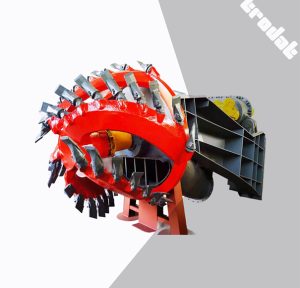
CSDs demonstrate clear advantages in these conditions, with their rotating cutters effectively fragmenting cohesive or layered soils for consistent removal. In a North American harbor expansion dealing with 60 percent clay content, CSDs maintained daily outputs of 2,000 cubic meters, surpassing alternatives hindered by clogging. Discover advanced CSD options tailored for such demanding soils.
Boundaries to assess upfront include the acceptability of positioning methods’ effects on navigation and the potential for weather-induced stoppages offsetting equipment strengths. Wind and wave thresholds, often around 3 meters for safe anchoring, can introduce variability, as seen in projects where seasonal storms reduced effective working days by 15 percent.
Typical Harbor Scenario 4: Localized Clearance, Deep Slots, Selective Extraction (“Only Remove What’s Necessary”)
Goals emphasize containing excavation scopes and disturbances, preserving separations between material types to facilitate targeted disposal.
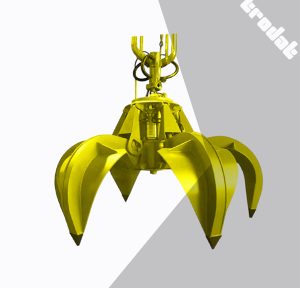
Grab dredgers shine in selectivity, allowing operators to isolate hard obstacles or contaminated zones without broad mixing. Backhoes extend this to intricate geometries and edge work, providing versatility in phased approaches. For example, in a Mediterranean port removing submerged wrecks amid silty beds, grabs extracted debris with 95 percent precision, minimizing ecological impacts.
Decision points revolve around balancing selectivity against volume efficiency and whether partitioned handling—by zones, layers, or streams—demands modular equipment. Explore grab dredger solutions for these targeted applications.
About TRODAT (SHANDONG) MARINE ENGINEERING CO., LTD
TRODAT (SHANDONG) MARINE ENGINEERING CO., LTD stands as a leading manufacturer in the marine engineering sector, specializing in the design, production, and servicing of high-performance dredgers and related equipment. With over two decades of expertise, the company delivers innovative solutions for harbor dredging, waterway maintenance, and coastal projects worldwide. Committed to quality and sustainability, TRODAT integrates advanced technologies to enhance operational efficiency and environmental compliance. Learn more about our heritage and capabilities.
Conclusion
Selecting the appropriate dredger for harbor dredging hinges on a balanced evaluation of site-specific variables, from soil types to environmental mandates, ensuring projects achieve efficiency, safety, and compliance. By applying the decision framework outlined, stakeholders can mitigate risks and optimize outcomes, transforming complex constraints into strategic advantages. Ultimately, this approach not only streamlines equipment choices but also fosters long-term port resilience in an era of increasing operational demands. Visit our homepage for comprehensive marine engineering resources.
FAQs
When is a TSHD not suitable for harbor dredging?
TSHDs face limitations in confined spaces near structures or in soils with high clay content, where their large size and suction method struggle with precision and hard material penetration, potentially leading to inefficiencies or excessive turbidity in sensitive areas.
What represents the biggest limitation of CSDs in harbor projects?
The primary constraint for CSDs arises from their fixed positioning requirements, such as anchors or spuds, which can significantly disrupt navigation in busy ports and increase vulnerability to weather interruptions, offsetting their strengths in handling tough soils.
Where lies the dividing line between backhoe and grab dredgers in harbor dredging?
Backhoe dredgers suit scenarios demanding strong edge control and bulk excavation in narrow zones, while grab dredgers excel in vertical, selective removals like deep slots or obstacles, with the choice depending on whether broad profile finishing or pinpoint targeting takes precedence.
Is combining a main dredger with a finishing unit common in harbor dredging projects, and what triggers such combinations?
Yes, hybrid setups are frequent when primary equipment handles bulk removal but lacks finesse for edges or hard spots; triggers include varied soil layers, tight precision requirements, or phased operations to minimize overall downtime and environmental impact.
How does soil composition influence the choice between CSD and TSHD for harbor dredging?
In harbors with predominantly loose silts, TSHDs offer superior mobility and output, but CSDs become preferable as clay or hard interlayers increase, providing the cutting power needed for consistent depth achievement without excessive over-dredging.

Post Comment