



If you run a dredging or slurry-handling job long enough, you’ll notice something that pump curves don’t warn you about: the same pump, the same pipeline, and the same crew can produce very different output from one shift to the next. Most of the time, the reason is not a “bad pump.” It’s density. This article explains how slurry density affects pump performance and production in real projects, using the same language operators and engineers use on site: head margin, power limit, efficiency drift, system losses, and density variability.
Answer: How slurry density affects pump performance and production
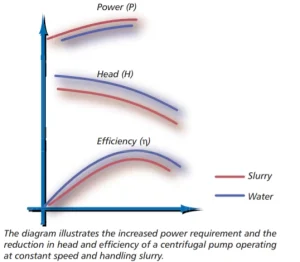
Slurry density changes pump behavior in two direct ways and one indirect way. First, higher density increases the hydraulic work required to move each cubic meter, so shaft power demand rises quickly and you hit motor or engine limits sooner. Second, slurry does not behave like clean water, so the pump’s head and efficiency at a given speed and flow typically drop compared with the water curve, which shifts the operating point away from the best-efficiency region. Third, density affects the pipeline: higher density and solids concentration often raise friction and internal losses, so system losses eat up the head you thought you had, and production falls even if the pump is technically “running fine.”
In other words, density does not just change one number. It changes the whole operating point, and that’s why output in real projects can swing more than expected.
What density is really doing to head, power, and efficiency
Head: why “available head” disappears faster than you planned
Engineers often calculate static head and friction head using an assumed slurry. The problem is that the assumed slurry is usually a single density value, while the field slurry has a range. When density rises, the pipeline demands more head to keep velocity stable, and the pump itself typically delivers less effective head than the clean-water curve suggests. That gap is where many “mystery production losses” live.
A practical way to think about head is margin: if your design has a thin margin, density variability will push you into under-delivery mode. Then operators compensate by changing speed, throttling, or running the pump in a harsher zone, which may recover flow short-term but accelerates wear.
Power: why amps spike and production drops at the same time
When density increases, the pump needs more power to do the same hydraulic work. On paper, you might still see a “reasonable” head and flow target, but the drive reaches its limit: current rises, temperatures climb, or the control system backs you off. That’s where production quietly falls—because you are no longer operating at the planned point.
This is also why a pump can look oversized in clean water yet struggle in slurry. The job isn’t to move water. The job is to move a mixture that keeps changing.
Efficiency: why the best-efficiency point stops being your friend
Efficiency is not a fixed label on the nameplate. In slurry, efficiency tends to drop due to extra internal losses, particle slip, turbulence, and wear-related clearances. Once efficiency drops, you pay twice: you burn more power for the same flow, and you have less head available to fight the pipeline. Production then becomes sensitive to small changes in density, particle size, or air entrainment.
Why production is a system number, not a pump number
System losses: the pipeline is where density punishes you
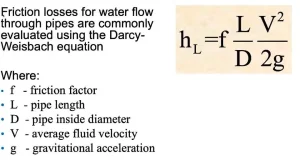
In real dredging and transport systems, production is often limited by the total head loss across the pipeline, bends, fittings, and elevation changes. Higher density usually increases friction losses and can push the line toward unstable regimes: partial settling, sliding bed, or intermittent surging. Even before you reach those extremes, the line simply consumes more head, and your delivered flow falls.
If you want a practical, field-driven view of how slurry transport systems behave over weeks and months—especially how losses and wear show up in day-to-day output—this pillar article is worth reading: Real-job-site slurry transport design guide.
Density variability: what changes on site that spreadsheets ignore
Density variability is not just “the material changed.” It is also digging depth, cutter angle, water inflow, operator rhythm, barge positioning, and even how long the line sat idle. Two slurries with similar density can behave differently if fines content and viscosity differ, which changes losses and affects pump stability. That’s why density control is production control.
Wear: why the same density becomes harder to pump over time
Wear widens clearances, roughens surfaces, and changes internal recirculation. Over time, you need more speed and more power to achieve the same output, which reduces your buffer against density spikes. In long projects, it’s common to see the “density tolerance” of the system shrink as wear progresses, making production more erratic unless you plan for it.
How to verify density-driven performance changes on a live project
In the field, opinions don’t fix throughput. A few repeatable checks will tell you whether you’re power-limited, head-limited, or losing margin to the pipeline.
Start with measurements that connect to production
In most jobs, the most useful question is not “What is the density right now?” It’s “What density range corresponds to stable output at acceptable power?” To answer that, pair density sampling (or inline density indication) with three operating signals: flow, discharge pressure (or differential pressure), and power draw. When output drops, these signals tell you whether you are power-limited, head-limited, or fighting rising system losses.
Check whether you are power-limited or head-limited
A power-limited system looks like this: density rises, amps rise, speed is reduced (by operator or control), flow falls, and discharge pressure may not increase as expected. A head-limited system often shows rising discharge pressure with falling flow, because the pump is climbing the curve while the line losses increase. Both cases reduce production, but the fix is different.
Confirm whether losses are increasing in the line
System losses can rise because of density, but also because of partial blockage, deposition, or worn sections that change hydraulic behavior. A practical field test is to compare pressure readings at consistent flow targets across multiple shifts. If the required pressure for the same flow is climbing, you are paying a “loss tax,” and density spikes will hit harder than they used to.
Validate whether density variability is operational or geological
Not every swing is a geology problem. If density fluctuates sharply with operator technique or digging pattern, production can often be stabilized with procedural changes and better training. If variability follows a predictable zone or layer, you may need a system-level adjustment: booster strategy, pipeline routing, or pump selection changes.
Fixes that work in real projects (without pretending slurry is constant)
Operational fixes: stabilize the slurry before you “upgrade the pump”
The fastest production gains often come from reducing variability. If your suction point is pulling alternating water and solids, the pump will see unstable loading, and efficiency will suffer. Improving mixing, using an agitator approach where appropriate, and tightening operating discipline can smooth density swings enough to keep the pump near a stable zone.
If your project relies on hydraulic-driven slurry collection in harsh environments or where power supply is constrained, a hydraulic slurry pump unit with agitation can help maintain intake consistency so the pump is not constantly “chasing” the slurry. You can review relevant options here: Hydraulic slurry pump units and dredging pumps.
System fixes: design for losses, not for catalog curves
When discharge distance or placement requirements are tight, the right question is whether the system has enough head margin after losses, not whether the pump meets a brochure number. In many long-distance jobs, separating the pumping stages, adjusting pipeline routing, and planning maintenance access reduce risk more than simply selecting a larger pump.
This is also where booster concepts become practical rather than theoretical. If the job requires stable production over long distances, splitting the duty can keep each pump closer to an efficient operating zone while reducing extreme loading that accelerates wear.
Equipment fixes: select pumps around the real density window
A credible selection method starts from the density window you will actually see, not the density you wish you had. If the job includes high concentration phases, abrasive solids, or large particle content, select wetted materials and a pump family built for those conditions, then size power and head with room for performance decay.
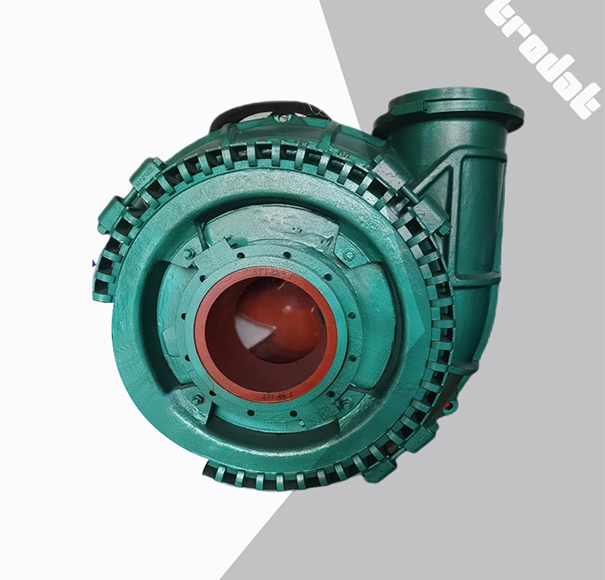
For example, the WN Series Dredging Pump is positioned as a centrifugal dredging pump option for sediment suction and discharge, with published ranges for flow, head, and efficiency to support matching with real job requirements rather than assuming ideal conditions.
Process fixes: plan for wear so production doesn’t quietly decay
Production planning should include wear planning. If you only design for day-one performance, density spikes will eventually push you out of a safe operating region. Build a plan that includes performance checks, planned wear inspections, and decision triggers—so you adjust before output falls below the job target.
Where professional support changes outcomes
Many density problems become “project problems” because teams address them too late. A structured approach that combines selection, system layout, and commissioning discipline prevents the familiar cycle of short-term fixes that increase long-term wear.
If you want a service partner that supports projects across design, consultation, installation supervision, and training, start here: Technical consultation and service support.
About TRODAT (SHANDONG) MARINE ENGINEERING CO., LTD
TRODAT (SHANDONG) MARINE ENGINEERING CO., LTD supplies dredging equipment and supporting marine engineering systems used in waterway and dredging applications. The company’s scope covers dredging pumps, hydraulic systems, working devices, and related modules intended to match actual job-site operating conditions, including the practical realities of system losses and changing slurry behavior. You can learn more about the company background and capabilities here: About TRODAT (SHANDONG) MARINE ENGINEERING CO., LTD.
Conclusion
Density is not a minor parameter—it is a moving load case that shifts head demand, power draw, and efficiency at the same time. If you treat slurry density as a range, track how it correlates to power and pressure, and design for system losses rather than ideal curves, you get something every project wants: stable production. The teams that win are the ones who stop asking “What pump do we have?” and start asking “What does our system do when density changes?”
FAQs
Why does production drop when slurry density goes up?
Because higher slurry density increases power demand and often increases system losses, which can push the pump away from its efficient operating range and reduce delivered flow.
How do I tell if slurry density is causing a head problem or a power problem?
Check power draw and pressure together. If power is hitting limits while flow drops, you are likely power-limited. If pressure rises while flow falls, system losses and head demand are likely dominating.
What slurry density range should I design for on a real dredging project?
Design for the realistic operating window, not a single average. Use site history, sampling during early production, and a margin that accounts for variability and performance decay over time.
How can I reduce density variability without changing the pump?
Stabilize intake conditions by improving mixing at the suction point, adjusting operating rhythm, and training operators to avoid pulling alternating water and solids that cause unstable loading.
When should I consider system changes instead of changing the pump?
When the symptoms point to rising system losses, long discharge distance constraints, or an operating point that constantly shifts with density. In those cases, pipeline layout, staging, and booster strategy can deliver more stable production than a simple pump upsizing.

Post Comment