



Here’s a familiar scene. You’ve got a new cutter suction dredger on site. On paper, it ticked all the boxes. But now, it’s not hitting its stride. Production is a constant push, fuel bills are staggering, and you’re changing wear parts almost as fast as your crew can install them. The problem isn’t the machine’s quality. It’s its fit. You’re trying to force a standard tool to solve a non-standard problem, and the project budget is bleeding out because of it.
In this business, the real expense is never just the purchase order. It’s what comes after: the fuel, the downtime, the repairs, the lost hours. That’s your total cost of ownership. Choosing a near-enough dredger is a gamble, and the house always wins. Real efficiency isn’t bought from a catalogue; it’s built from the ground up, starting with a clear picture of your site’s mud, your distance, your challenges.
Why “Close Enough” Isn’t Good Enough
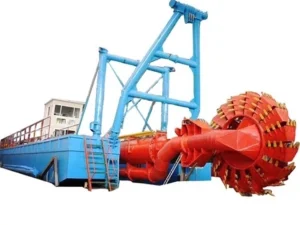
Let’s talk about what goes wrong. A cutter head designed for loose sand will just polish the surface of hard clay. It’ll ride up, vibrate, and wear out its drives without moving much material. You burn fuel, you burn time, you burn through parts. Conversely, a massive rock cutter in soft silt is overkill—an expensive, fuel-thirsty overkill. The mismatch starts at the cutting edge and ripples through the entire operation.
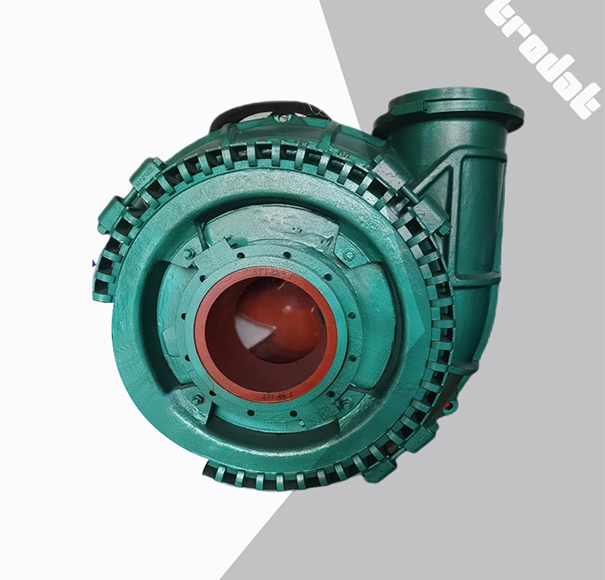
The heart of the issue is the pump. A standard pump selected for ‘average’ conditions is rarely right. For long runs, it might struggle, forcing you to run the engine flat-out just to push slurry to the halfway point. You’re not just paying for the extra diesel; you’re stressing every component in the system. We’ve seen projects where the fuel consumption per cubic meter doubled because of a poor pump-to-pipeline match. That’s money straight out of your margin.
And it’s not just about dirt and distance. Is it a narrow canal? A congested port? A standard hull might not have the stability or the swing room to work effectively. You end up with a dredger that can technically dig, but can’t operate smoothly in the space you have. The result is more repositioning, less cutting, and a blown schedule.
Building from the Ground Up: The TRODAT Process
So how do we fix it? We start by listening, not selling. Our engineers want to see your geotechnical reports. We need to understand the grain size of that sand, the plasticity of that clay. We map your exact pumping distance, including every meter of vertical lift. This data isn’t just paperwork; it’s the blueprint for your machine.
Take the hydraulic system. We don’t just supply a standard power unit. We design a system where the pressure and flow match the specific needs of your winches, your spuds, and your cutter. This means faster, more precise movements without wasting energy generating excess power that just gets bled off as heat. It’s about getting the right force, right now, with less strain on the components.
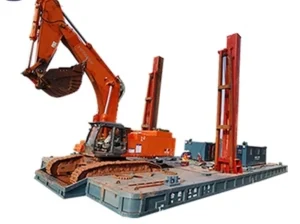
For truly challenging long distance pumping work, an off-the-shelf booster pump often won’t cut it. We design and build separate pump stations that are matched to the main dredger pump. These aren’t just extra pumps; they’re timed, pressurized re-energizing points for the slurry column, keeping everything moving efficiently over kilometers. Sometimes, this station sits on one of our custom floating platforms for mooring, designed for stability in the specific currents of your site.
This whole approach is what we call integrated modular dredger design. The goal is to give you a system where every component—from the cutter teeth to the discharge pipe—is speaking the same language and working toward the same goal: moving your specific material, your specific distance, at the lowest possible cost per cubic meter.
How Smart Design Saves Money for Years
The benefit of this upfront work isn’t just a machine that works on day one. It’s a machine that keeps working, efficiently, for years. That’s where you save real money. A correctly sized engine and pump operating in their efficient “sweet spot” can reduce fuel use by 15% or more compared to a mismatched system. That’s a saving that hits your bottom line every single working day.
Maintenance costs dive, too. When components aren’t perpetually over-stressed or under-utilized, they last longer. Bearings, seals, impellers—their lifespan extends. You’re not just saving on parts; you’re saving on the massive cost of unscheduled downtime. A few extra days of production each year from improved reliability can pay for the premium of a custom design.
This is the core of our dredging engineering consultation. It’s not a sales pitch. It’s a risk-mitigation exercise. We use the data from your site to model performance and identify these cost traps before they’re built into steel. We help you select the right dredger model not based on a glossy brochure, but on a clear forecast of solid yield and operating expense. It turns the biggest variable in your project—equipment performance—into a known quantity.
Seeing the Difference: A Practical Scenario
Imagine a canal maintenance project. The material is a mix of old, compacted silt and some gravel. The pumping distance is 1.8 kilometers. A contractor brings in a standard, high-flow dredger meant for soft sand.
The problems start fast. The cutter can’t break up the compacted layers effectively. The high-flow pump, designed for watery slurry, now has to handle a denser, gravelly mix. It cavitates, the impeller erodes, and production crawls. Fuel costs soar because the engine is fighting to keep the pump turning. Within a week, they’re changing worn parts and are already behind schedule.
Now, let’s run that project with a TRODAT custom approach. First, the cutter head gets heavy-duty teeth set in a pattern that fractures the compacted material, not just scrapes it. The pump is selected for a lower, steadier flow that can handle the density and the gravel without cavitation. Its impeller and liners are a harder grade to resist abrasion.
The result? The daily production meter shows consistent, predictable numbers. The fuel tank needs refilling less often. The crew spends their time operating, not repairing. The project finishes on time, and the dredging project cost efficiency makes the client’s accountant smile. The custom dredger didn’t just do the job; it defined the project’s success and profitability.
About TRODAT (Shandong) Marine Engineering
At TRODAT, we build more than dredgers. We build reliable, high-performance solutions for complex marine engineering challenges. Based in Shandong, China, our team believes that powerful equipment must be paired with deep technical insight. Our process is built on collaboration—transforming your specific site data and project goals into a machine that performs from its first hour in the water to its last. From initial custom cutter suction dredger design to on-site training, we’re focused on making your investment a long-term success.
Conclusion
The choice in front of you is clear. You can accept the hidden expenses and unpredictable performance of a standard machine, hoping your project can absorb the hits. Or, you can invest in a precise, purpose-built solution that turns your biggest operational risk into your greatest competitive advantage. A custom-designed dredger is a direct investment in predictability, control, and ultimately, in the health of your project’s profit margin. It’s the difference between working for the machine and having the machine work for you.
FAQs
Q: Doesn’t a custom design mean a much longer wait for delivery?
A: It means a smarter start. While engineering takes time upfront, it eliminates the weeks or months of debugging, modification, and low production you often face with a standard machine that doesn’t fit. You’re essentially shifting time from the costly, chaotic project phase to the controlled, value-adding design phase. The net result is very often a faster path to full, efficient production.
Q: We have some site data, but it’s not perfect. Can you still help?
A: Absolutely. Perfect data is rare. Our engineering team is experienced at working with real-world information—the kind you actually get from a site. We can use your best available data, apply conservative assumptions based on experience, and design a robust solution that covers a range of likely conditions. The consultation process itself helps clarify what information is most critical.
Q: If the dredger is custom for one job, what happens to its resale value?
A: A well-designed custom dredger often holds its value better than a generic one. Why? Because it’s a proven, high-performance solution for a specific set of challenges. The market for a specialized, reliable machine is strong. Furthermore, our modular approach means core systems can be adapted for new tasks, protecting the asset’s utility and value far into the future.
Q: What does your training service actually cover?
A: It’s specific to your machine and your project. We don’t just hand over a manual. Our specialists will be on-site during commissioning to train your crew in efficient operation, daily maintenance checks, and how to recognize early signs of common issues. The goal is to make your team confident and self-sufficient, ensuring you get the full performance we designed into the equipment from the very first day.

Post Comment